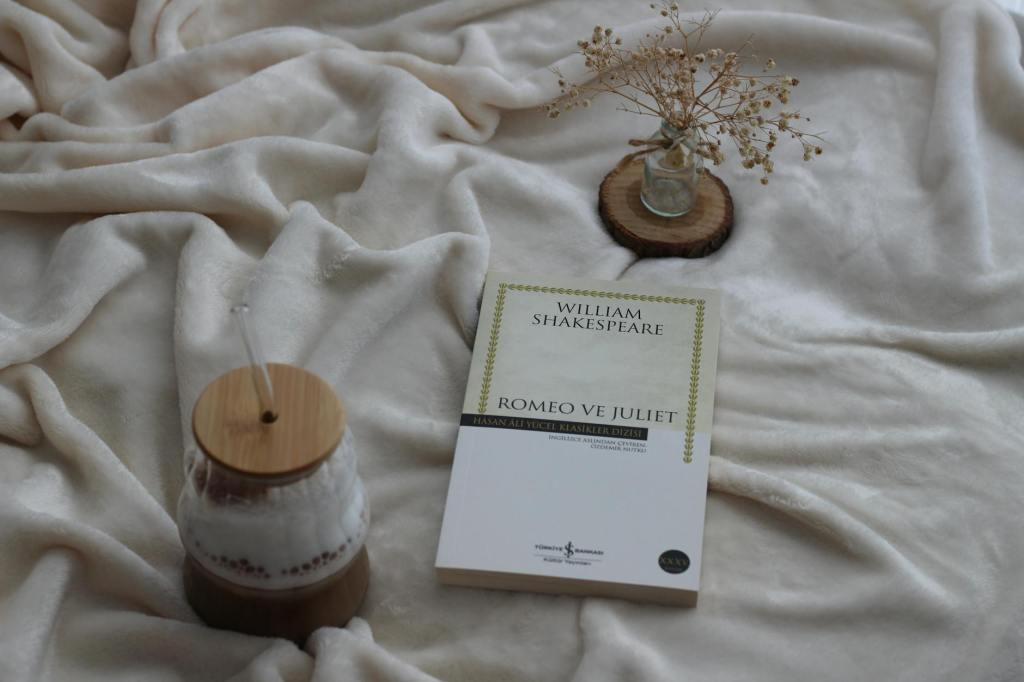
Love, violence and tragedy make up one of the most famous stories and plays written, a classic that shook the literary world and made an impact, still leaving its mark centuries later. The Shakespearian tragedy of two star-crossed lovers, Romeo and Juliet, has inspired multiple remakes of plays, stories and movie adaptations throughout the years. It opened a gate way for analyzing and studying the themes of love, violence, death, tragedy and societal pressures (or norms) of the Renaissance era up to present day. One of the biggest leading factors in the role of this tragedy is based around the themes of individualism versus society, Romeo and Juliet’s love being forbidden, challenging and unreasonable considering the feud between the Montagues and the Capulets. Their love is challenged by the honor and expectations of their families; their individual desires being obstructed by societal pressures and expectations. Not only is the story of Romeo and Juliet about love and the violence that can surround it, but it touches on the potential consequences of seeking personal freedom and choices in opposition to societal norms and expectations (LitCharts, sparknotes). Comparing this in Shakespeare’s original play with that of a more modern-day adaptation, particularly Baz Luhrmann’s Romeo and Juliet, one can look at the message of the dire effects social constraints can have individuals, especially the vulnerable (considering how young Romeo and Juliet are).
“The violent delights have violent ends in their triumph die, like fire and powder, which, as they kiss, consume.”
(Act 2 sc.6, pgs. 109,111).
This quote connects the destructive power of their love to being so much so that it defies the social and familial norms of their time, leading to the tragic consequences in the end (Book Analysis).

In Shakespeare’s play, the story takes place at the same time that William Shakespeare himself lived in the Higher Middle Ages (Renaissance), a time where elite noble families, like those of the Montagues and Capulets, ruled over the peasant class (which made up much of the population). Europe in those times was a time of even more profound social inequity, a handful of the wealthy and noble enjoying the luxuries of life while everyone else suffered in poverty. The social structures of that time were made up of the nobility, the gentry, middle class and the commoners, the nobility at the top owning vast estates and holding the political and economic power. The gentry were landowners, below the nobility, that held authority over smaller communities, and the middle class made up of merchants, professionals and skilled craftsmen. They had more economic stability than that of the lowest class, and they had some mobility with increasing social status. The commoners, which were the lowest class, were made up of laborers, farmers and artisans that struggled to support themselves and their families. The structure reflected birth and wealth, consisting of a rigid hierarchy, making it difficult for people at the bottom of the social order to move up in society (Shakespeareincontext.com). Many of Shakespeare’s works reflected and challenged this, exploring power, ambition, responsibilities and the consequences of ignoring individual needs and freedoms in favor of keeping the peace over a larger collective (Skakespeareincontext.com).
Romeo and Juliet reflects this, focusing on two noble families, the Montagues and Capulets, who have a deep-running feud battling for power and honor in their fair city in Verona, Italy. They often disturb the peace that is supposed to be maintained when brawls break out between members of their houses, eventually earning them the threat of death by Escalus, Prince of Verona, if the peace continues to be disrupted. Then Romeo Montague ends up meeting Juliet Capulet, children of the Montague and Capulet families, and their meeting sparks an intense and whorl wind love that isn’t a “pretty” or “dainty” type of love, but a violent and powerful love that pushes them to defy their societal world and even themselves, pressured by familial expectations versus what they really desire (sparknotes). This forces both Romeo and Juliet to put on an appearance and falsely uphold a sense of peace within their families by controlling their desires, secretly searching for answers to their problems and involving other and endangering them with the chaos that their forbidden romance creates. This ultimately results in tragedy and the deaths of multiple people, including Romeo and Juliet themselves. The hate between their families, the struggle for power and control, and ultimately the constraints of these things as well as pressures brought onto Romeo and Juliet caught in the power struggle and strife consumed them in the end.
“Two households, both alike in dignity (in fair Verona, where we lay our scene), where ancient grudge break to new mutiny, where civil blood makes civil hands unclean. From forth the fatal loins of these two foes a pair of star-crossed lovers take their life; whose misadventured piteous overthrows doth with their death bury their parents’ strife.”
(The Prologue, pg.7 Folgier Shakespeare Library Edition)
The prologue states the tragic events that occurred from the chaos of Romeo and Juliet falling in love due to the feud between the noble Montague and Capulet houses. Introduces the main themes of love, fate, violence, individual desires versus social constraints, and youthful impulsiveness (Book Analysis).

Individualism versus society in Shakespeare’s original works of Romeo and Juliet, due to the time period in which the play was written, also emphasized the role of a patriarchal society, along with the nobility, gentry and commoner social structure. The constraints of living in a patriarchal society suppressing and controlling the female roles put a lot of social pressure especially on Juliet. One of the biggest examples of this is first seen in act 1 scenes 2 and 3, which intensifies as the play goes on. Capulet (Juliet’s father) and Paris are having a conversation about marrying Juliet off to Paris, however her father is worried with how young she is (13 years old), but as the play progresses his desire to use Paris for the social elevation of his and his family’s status increases, therefore interfering with not only Juliet’s social and romantic life, but also her choices. When Juliet’s nurse and Lady Capulet (Juliet’s mother) ask Juliet about the thought of her marrying, she mentions that she hasn’t thought about it. They then relay the news of Paris’s interest in Juliet, which excites the nurse and Lady Capulet because of Paris’s status, however Juliet isn’t sure about love or marriage. Though Juliet is unsure at his point, the nurse and Lady Capulet suggest disregarding love in favor of finding a sensible match, which as the play progresses is the driving factor of pushing Juliet into a marriage with Paris.
The Capulets try to push Juliet into making adult decisions to further their own needs, disregarding Juliet’s feelings and choices in the matter, ultimately being a huge contributor to the tragedy in the end. After Romeo and Juliet meet and fall in love, Capulet makes the decision to have her marry Paris, however at that point Romeo and Juliet are deep into the chaos and violent points of their love, so much so that they are secretly married, and she tries to shut down the idea of marrying Paris. However, Capulet doesn’t take this well and flies into a rage, promptly shutting Juliet’s protest down. However, Shakespeare battles this suppression by giving Juliet power when going about her pursual of Romeo, and her actions in order to be with him. In the end however, this suppression and attempt to control Juliet’s life decisions, along with Romeo and Juliet already rebelling against the constraints of their societal order, pushes them further into making risky, dangerous and ultimately fatal decisions, leading to their deaths in the end. The consequences to the actions of society and the people around Romeo and Juliet, especially the Montagues and Capulets, leave a message in the end and makes them reflect on both sides’ enmity towards each other, and how this effected Romeo and Juliet and everyone else involved. The Montagues and Capulets then decide to make amends and honor their children by erecting statues in their memory.
In Baz Luhrmann’s adaptation William Shakespeare’s Romeo + Juliet, individualism versus society themes is still a big factor, but Luhrmann’s adaptation presents it differently, giving it a more modern approach that people in the present day can understand and relate to better. Instead of sticking to the older style of Shakespearean works within the Renaissance era, Luhrmann’s film takes the story and fast forwards it to 1990s present day, where societal structures altered and changed into a more business-wealthy and gangster style society in America, set in “Verona Beach” rather than “Verona”. Interestingly, Luhrmann kept the Elizabethan style of speech like what is seen in Shakespeare’s play, even keeping “swords” in reference to guns used in the movie, but with the complete change of setting, scenery, some character names, absence of characters, less deaths, to complete change of scenes (such as Romeo and Juliet’s meeting, Romeo and Friar Lawrence, Romeo and Juliet’s death, etc.). Romeo and Juliet still undergo the pressures of their familial expectations and what is the business feud between the Montagues and the Capulets. However, the film focuses more on the teenage/young adult aspect of youth, giving the scenes more of child-like innocence (such as when Romeo and Juliet first meet through the fish tank, their impulsiveness throughout the adaptation, etc.). With the fast-paced setting of a modern business society and the wealthy business and higher-class attitude of the Montague and Capulet households, these moments bring a softer and more intimate emotion to the chaotic, eccentric city society. This perspective in itself goes against the societal norm of being a busy and fast-paced environment where things are quick and snappy. Taking the moments and slowing them down to focus on their moments gives Romeo and Juliet’s scenes more connection and emotion.
“A glooming peace this morning with it brings. The sun for sorrow will not show his head. Go hence to have more talk of these sad things. Some shall be pardoned, and some punished. For never was a story of more woe than this of Juliet and her Romeo.”
(Act 5, scene 3 Folgier Shakespeare Library Edition)
A somber recognition for the ending of the tragedy after everything is said and done. There will be consequences to the actions of everyone involved with the fate of Romeo and Juliet, deriving from the battle between the Montagues and Capulets and the social pressures, which will be remembered because of how sad their story was.

Baz Luhrmann’s film, because it was changed to be set in modern times, also gives the characters themselves more depth and personality. One of those instances is when the Capulets throw a huge costume party (which is a feast or ball in the play), and everyone was dressed according to what their personality represented (Lady Capulet as Cleopatra, Juliet as an angel, Romeo as a knight, Tybalt as a devil, Mercutio as a shiny dancer, etc.), whereas in the play that scene is a bit different because while the characters have their own personality they are made to constrain themselves in the style and garb of the Elizabethan era. It is easier for the audience to determine the way the characters are meant to be interpreted, not just in what they say but with the style that matches the role they play in their society. Overall, Luhrmann’s adaptation makes it easier to understand the story of Romeo and Juliet because of modernization, the freedom and variety of their styles and how we can relate to them today, while maintaining the originality and plot of the story to still be analyzed. Romeo and Juliet have more of the freedom of expressing themselves in their modern society, however they are still suppressed by the role their parents play in society, their battling for power and control in their businesses and what they expect of their children to carry on their legacies, ultimately still providing that segway into the tragedy in the end, in which the parents are left contemplating and mourning over.
In the end, individualism versus society was a major factor in the story of Romeo and Juliet. From the deep feud between two the two powerful families the Montagues and the Capulets, to the pressures of society, order, constraints and expectations put upon individuals, to the sudden and violent power of love and desire, defying and rebelling against the societal order, for tragic circumstances that ended up blowing up in the faces of everyone involved. It left a message from Shakespeare to consider the damage that societal constraints and structures have and the consequences that arise from people suffocating and clawing their way out of the binds that society ties certain individuals in. It brings a perspective of looking at emotions such as love and hate to be powerful and destructive in the wrong circumstances and not being something to overlook or disregard. Shakespeare’s works and the messages that his stories such as Romeo and Juliet are meant to be seen and shown, having made an impact on people for hundreds of years and inspiring the multiple remakes and adaptations in different styles, forms and contexts such as Baz Luhrmann’s film adaptation William Shakespeare’s Romeo + Juliet. The themes and messages from Shakespeare’s original works still apply to these adaptations, however like with Luhrmann’s interpretation and style of how he represented the story make it easier for people today to understand the morals and consequences of the events, as well as the people and situations adding to the downfall like what is seen in the tragedy of Romeo and Juliet.
Resources
- LitCharts. (2013). Individuals vs. Society Theme in Romeo and Juliet. LitCharts. https://www.litcharts.com/lit/romeo-and-juliet/themes/individuals-vs-society
- Pizano. (2020). Speaking Without Words: Luhrmann’s Adaptation of Romeo and Juliet. Interdisciplinary Literary Studies, 21(4), 532. https://doi.org/10.5325/intelitestud.21.4.0532
- spark notes. (2019). SparkNotes: Romeo and Juliet: Themes. Sparknotes.com. https://www.sparknotes.com/shakespeare/romeojuliet/themes/
- Mowat, B. A., Werstine, P., & Shakespeare, W. (2020). Romeo and Juliet Folger Shakespeare Library. william shakespeare.
- Bovey, L.-J. (2024, September 24). 15 of the best romeo and Juliet quotes. Book Analysis. https://bookanalysis.com/william-shakespeare/romeo-and-juliet/quotes/
- Context, in. (2024). Shakespeare in Context – Society. Shakespeareincontext.com. https://www.shakespeareincontext.com/society

 Sprockets and Springes