Hello everyone and welcome back to The Reader’s Eatery! Today we’ll be talking about a new recipe I came up with after my recent trip to Japan with my fiancé. Among the AMAZING foods we tasted omurice is what really stood out to us, so before we get into the recipe let’s talk a little bit about them!

We arrived in Tokyo really early in the morning, so not much was open regarding food. Their vending machines were amazing though, so we got cake from one and headed to the train station to wait for ours. We headed to Kyoto (where we’d be staying for the next few days!!!) and got settled in our room before heading to a restaurant with the best omurice in Japan!
The restaurant had been recommended by some friends who had visited before, and the chef was incredibly kind and quirky (LOL)! But what is omurice? Well, it’s an omelet served over rice. Thank you all and I’ll see you next time!
Ok, ok, fine. It’s a little more than that. Omurice (also called Omu-raisu) is dish composed of a very specifically and carefully cooked runny omelet placed atop fried rice before being sliced open and served with a French demi-glace sauce. It’s kind of crazy how careful you have to be when cooking it, as undercooking it won’t the omelet properly form but overcooking it will cause the egg to not be nearly runny enough. Fortunately the wonderful chef was kind enough to show me how to make it!

After coming home, I knew I had to make my own take on this dish, and considering our blog I felt it only made sense to combine omurice with a classic Japanese story; the ghost story of Oiwa, also known as Yotsuya Kaidan.
While the story itself is long and incredibly detailed, the best way to summarize what is needed to know for the symbolism behind our dish is that at the end of the story, this swordsman Iemon (not LEMON, haha) gets his comeuppance when, after staining his blade with the blood of many and running away into the mountains, the ghost of his first victim emerges from a fiery lantern as a spirit of vengeance and kills him.
The onions and garlic in the recipe represent the supernatural, as since ancient times alliums (like garlic, onions, and leeks) have been seen as magically protective plants, and the fact that they’re white further alludes to their underworldly connection in this Japanese-inspired dish specifically, as the color white is the color of ghosts in Japanese folklore.
The red, spicy sauce is both to add color to the yellow of the egg and make it look like fire but also to add a burning sensation in the eater’s mouth. The scallions around the edge dipped in the red sauce and pointing at the omelet represent the path of blades Iemon took to get where he ends up and the white of the rice represents the snowy peaks he died on.
On that cheerful note, let’s get to the recipe!
Ingredients for Burning Vengeance Omurice
- 1 tablespoon gochujang
- 1 clove of garlic, peeled
- 2 tablespoons soy sauce, plus some to taste/decorate
- 1 teaspoon rice vinegar
- 1.5 tablespoons sesame oil
- 3 large eggs
- 1 cup of white rice
- 1/4 small white onion
- 5-6 scallions
- Salt to taste
You will also need:
- A rice cooker
- A small, nonstick pan
- A cutting board
- A sharp knife
- A whisk
- A strainer
- Chopsticks (I know it can be hard to use them, but BELIEVE!!)
- Multiple (at least 3) bowls
- Neutral cooking oil
How to Make Burning Vengeance Omurice
- Start cooking your rice in your rice cooker, however the specific model instructs.
- Mince the garlic, slice the onion, and cut the scallions in half, and then in half again diagonally so they look like small blades.
- Lightly fry the onion in a small amount of oil until it becomes lightly translucent.
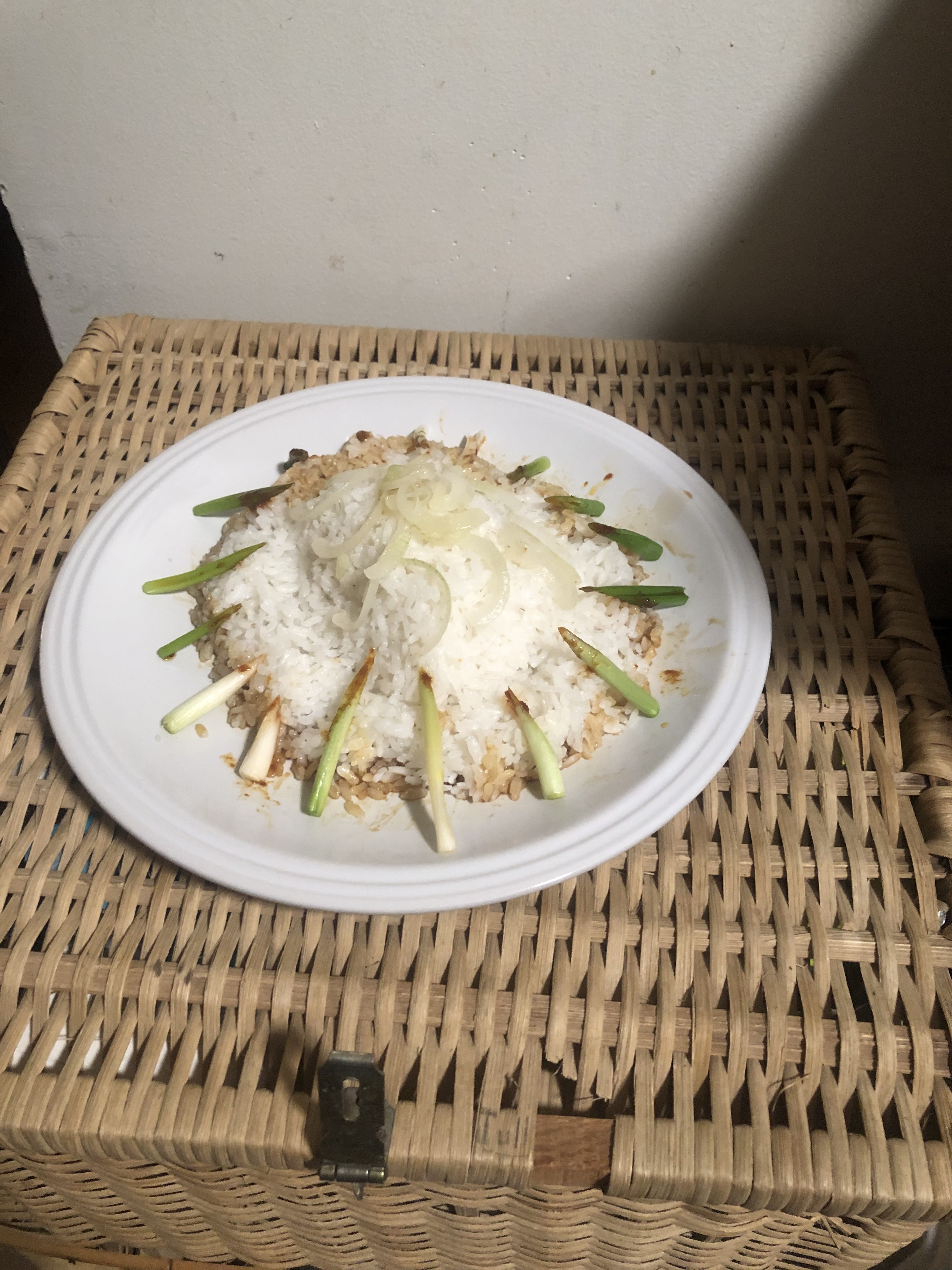
- Place the cooked rice in a large patty-like shape on a plate, then place a small mound of rice atop that. Add a few dashes of soy sauce on the sides of the base patty to emulate the rocky, lower parts of a mountain.
- Place the onion pieces atop the central mound of rice.
- Place the garlic in the pan where the onion was fried and fry it for one minute.
- Add gochujang, soy sauce, and rice vinegar. Mix thoroughly until the sauce has fully homogenized.
- Place the red sauce in a small, heatproof bowl and add the sesame oil.
- Thoroughly wash and dry the pan.
- Dip the tips of the scallions in the red sauce and arrange them on the plate so the red tips point upwards. (See the left image at the bottom for what the dish should look like up to this point)
- Crack the eggs into a bowl and whisk thoroughly until fully scrambled.
- Pour the eggs into a strainer over another bowl and whisk while it strains until no more egg can be strained.
- Coat the inside of the pan with oil and bring it to high heat.
- Pour the egg mixture into the pan and mix vigorously with chopsticks while moving the pan rapidly. Let the bottom cook until it’s a thin film of cooked egg.
- Carefully shuffle the eggs to the edge of the pan while beginning to fold them (it’s hard to explain in words, so this step I will ask my good friend the internet to help you with!)
- Pour some of the red sauce into the runny egg.
- Fold the egg into its omelet shape.
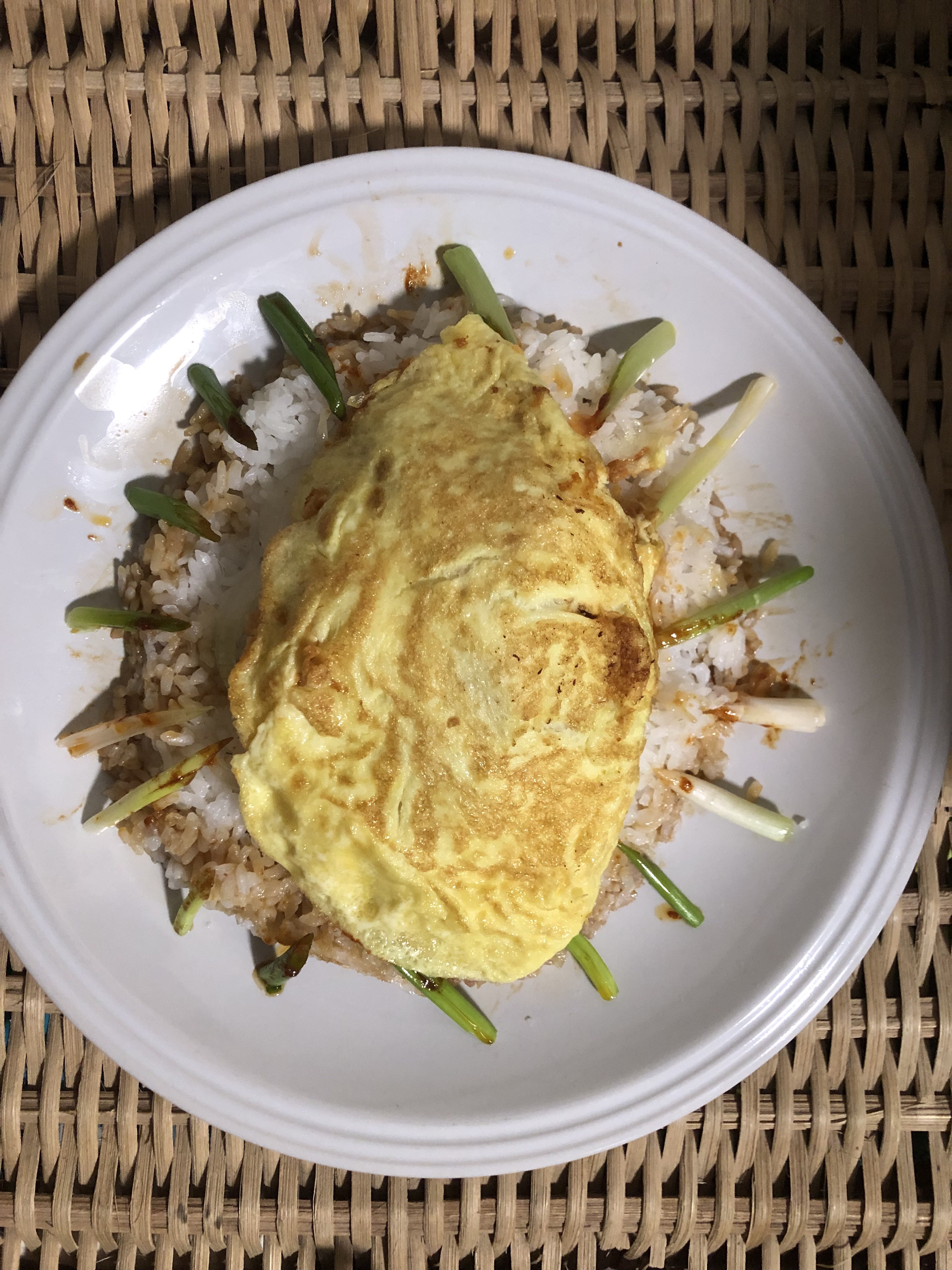
- Let it cook for a few seconds before flipping onto the center mound on the rice. (See the middle image at the bottom for what the dish should look like up to this point)
- Slice the egg mixture down the middle, hopefully to a nice flow of red and orange down the sides of the dish!
- Pour the rest of the red sauce over the dish. (See the right image below for what the completed dish could look like)
- Dig in and enjoy!
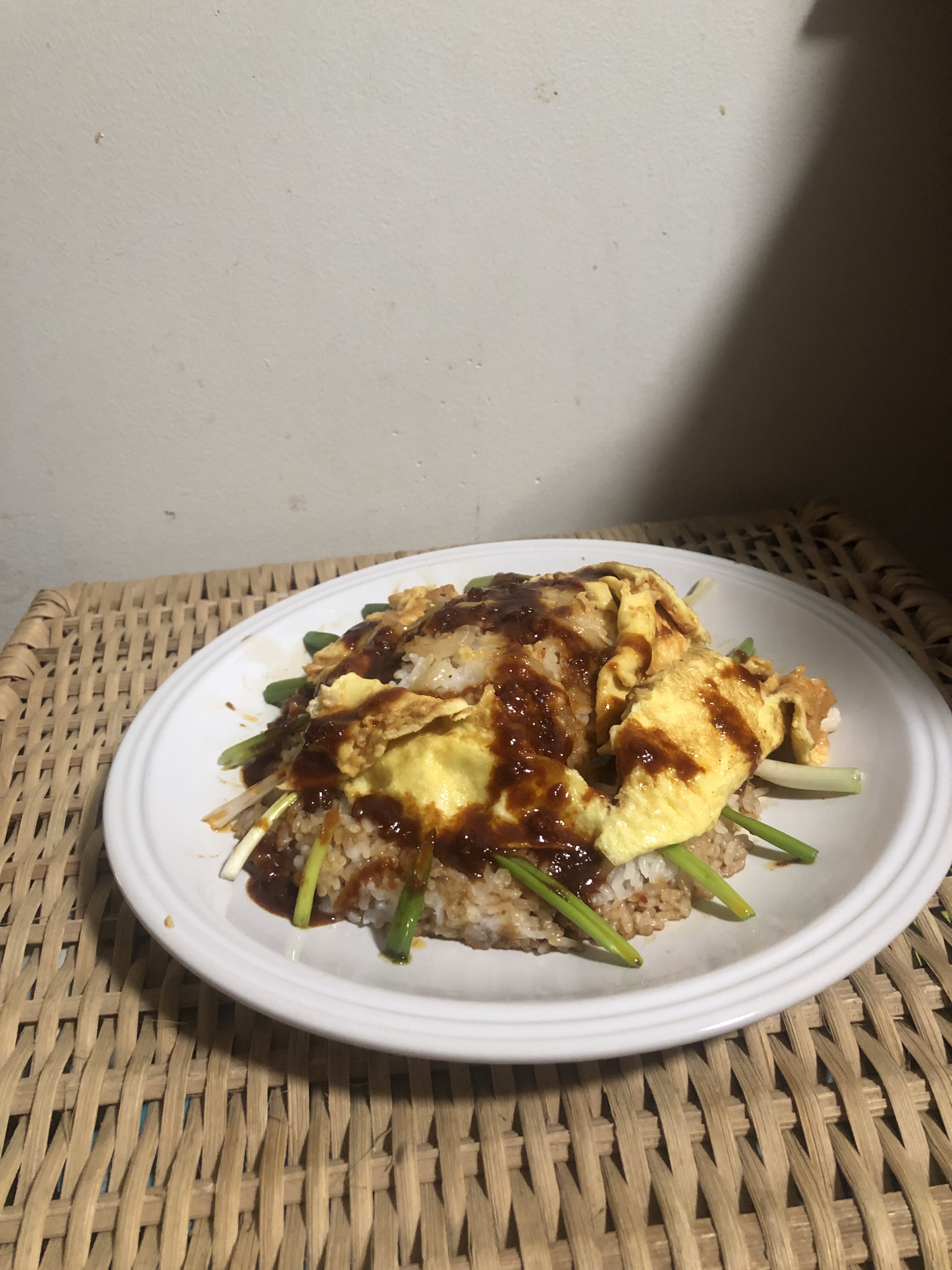
Phew! Note to you lovely readers; I didn’t successfully make the dish! I know, as the cooking king I should be the one who knows how to, but frankly there’s a reason omurice is considered the hardest omelet in the world to make. Oh well!
Hope you folks have had a wonderful time, and as always remember to feed your minds, your hearts, and your stomachs 🙂 – Cyrus XOXO

 Sprockets and Springes