Funny story diving into reading Yotsuya Kaidan, AKA The Ghost Stories at Yotsuya on the Tokaido. The weekend before I did the reading, I watched Netflix’s new animated show Blue Eye Samurai. It had everything I loved. Great animation, incredible voice actors, lots of violent, gory fights, and incredible writing in terms of the characters and symbolism. One writing aspect I was very drawn to was the inclusion of the onryō, a Japanese ghost notable for haunting, torturing, and killing people who have wronged the spirit in life in the form of bloody revenge.
The main character, Mizu, especially shares this type of character because not only does her whole character revolve around revenge and racial justice in Edo Japan, but she is also compared to an onryō, which relates to a woman who was wronged by her husband or other people in life. Once dying, they become vengeful spirits that will do whatever it takes to get back at all who have wronged them. Though Mizu doesn’t die (thank goodness, she is a badass), she still showcases the true spirit of a vengeful ghost who will do grizzly murders and tortures just to get justice for themselves served. Go watch Blue Eye Samurai, it’s a great show and I’m so glad to have watched it before doing the reading.
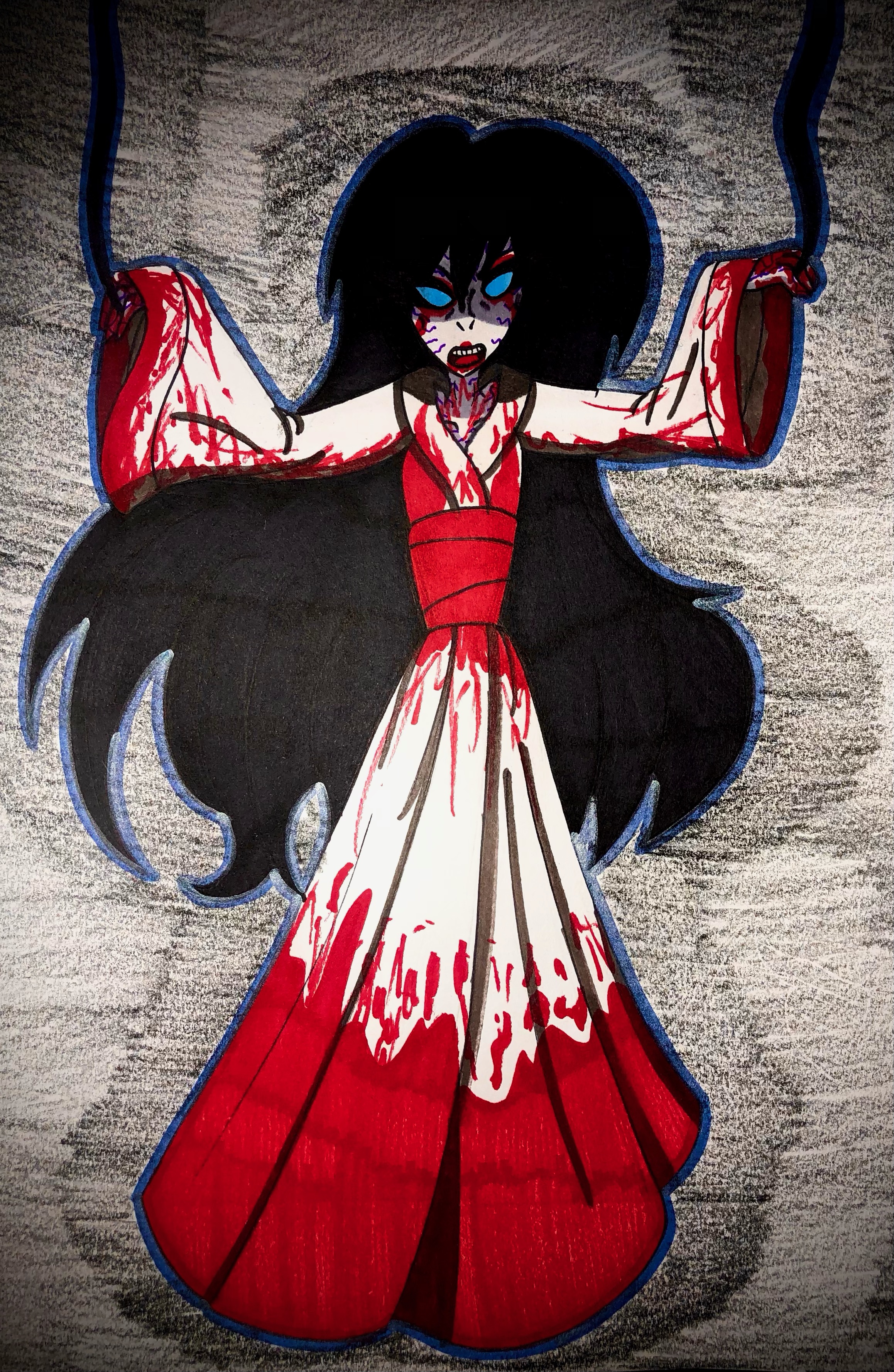
The concept of the onryō intrigued me, so after reading Ghost Stories and feeling pitied for Oiwa’s story (screw Iemon), I thought I would reinforce the onryō concept and draw out my interpretation of it using research based on the story and online. The goal of this project was to enforce the themes of horror and the supernatural. To let the audience know that this ghost would KILL you if you messed with it in real life, or were allied with their main target. I specifically looked into the traditional aspects that make up the onryō. They included ghostly white skin, purplish veins, long flowing black hair that can puff up if they’re provoked, and white kimonos that become stained in blood, representing the death they endured and the death they caused.
Onryō are commonly seen as young women who were wronged by their husbands or lovers. This would make sense as in the Edo period, women were treated more like property than people. There would be two directions for them in life: marry a husband and become a mother, or become poor, which would result in poverty or prostitution. It would make sense to feel extra pity for Oiwa since she was subjugated to Iemon’s cruel plan to get out of their marriage. She was a puppet in his scheme and when she was snipped from her strings (dead), she grew her opening to forge her own strings and get back at Iemon for all the wrong he did to her and everyone else in the story. I wanted to symbolize that, especially by having strings attached to her. Not only to represent her controlled fate in the story but also to pay homage to Kabuki Theaters, one of Japan’s great forms of entertainment.
This is no doubt one of my favorite readings this semester. I love reading about supernatural deities and hidden justice in the prejudiced systems stories like this were written in. I’m glad I watched Blue Eye Samurai before reading The Ghost Stories at Yotsuya on the Tokaido because it gave me a tremendous insight into Edo Period Japan at the time, which included the onryō and women’s rights at the time. I’m really glad with how this piece I drew worked out. It embodies the horror I was imagining and hope it grasps fear in those who see it. Feel what Oiwa went through a never let anything like this happen to anybody. The last thing anybody needs is this thing haunting them until it convinces them to accept death.
Works Cited
FL, Gaby. “The Tales of the Onryō’s Vengeful Ghosts in Japanese Mythology.” Cultura Colectiva, 18 Mar. 2023, culturacolectiva.com/en/history/onryo-japanese-mythology-vengeful-spirits/.
James R. Brandon, and Samuel L. Leiter. Kabuki Plays On Stage. Volume 3 : Darkness and Desire, 1804-1864. University of Hawaii Press, 2002. EBSCOhost,
search.ebscohost.com/login.aspx?direct=true&db=nlebk&AN=2113123&site=ehost-live.
Rhys, Dani. “Onryō: Vengeful Spirits from Japan’s Ancient Myths.” Symbol Sage, 2 Nov. 2023, symbolsage.com/onryo-japanese-ghost-of-vengeance/.

 Sprockets and Springes
1 Comment