To be a witch is to
  Move amongst the stars
    While staying here on Earth

With the light of the Lady, and love of the Lord
     With will, intent, and purpose
          With the light of the Lord, and love of the Lady
               With perfect love and perfect trust
I charge this circle
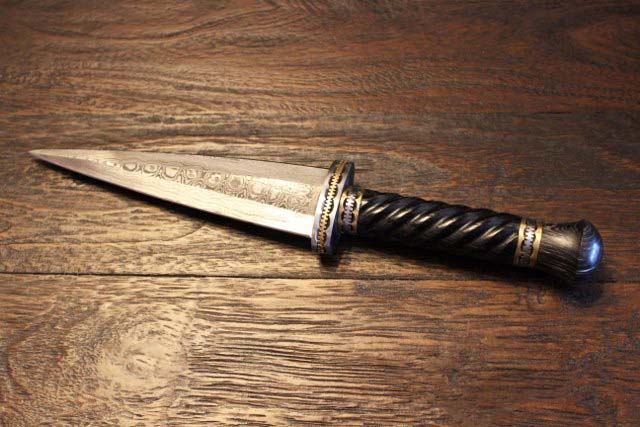
I point the athame toward the interior

I fumble the blade down
Pick up the smudge stick
And light it

With sacred smoke, I invoke
I move a reed rake, sweeping smoke into the circle
Calm and clear, enter here
The smell of burnt sage dances at the fringes of my senses

East--Spirit of Air, you are the glory of flight
      South--Spirit of Fire, you are the bonfire bright
          West--Spirit of Water, the crashing waves’ height
               North--Spirit of Earth, the source of my might
Keep me strong through my rite.

I kneel in wild moss
Athame at my right
I wonder what it all would cost
For the world to lose a man tonight

To frolic in the Summerlands
To give back to the gods
What little I took from them

To be a witch is to
  Be one
    With the gods.

I take my sharpened blade in hand
And press it to my thumb
The pain is more than I can stand
But then the ichor comes

Blood, not but primordial thrum
Will flood into the ground
A pinpricked crimson thumb
Where new life could be found

The Three-Fold Law
Whatever I put into the world
Will come back to me -- in three

I wonder then
What could be done
With three times a life’s worth

To only spare a drop within the circle’s bound
Would shield my friends and family
As it spills upon the ground

To be a witch is to
  Dance and sing
    And hold hands with the universe

I feel my hands land in palms of spirits far beyond my reach
Blood spills on them
I think of all my lessons learned, and those I’ve yet to teach

I feel calm, and incomplete

To be a witch is to
  Harm
    No one.

The crimson thumb throbs in pain
I stick it in my mouth
The Earth around, it all had stained
Exsanguinated out

The iron floods, I have the taste
Of bloodied hands and soil
Then the moment saturates
With this modicum of toil

In the moment, quiet peace
A stillness of the air
And in an instant the pain has ceased
Along with all despair

Forces work an aegis
Another sanguine shield
I’ve spent my body’s wages
To reap my spirit’s yield

As I will it, so mote it be.
With Sacrifice I wanted to connect my own cultural background of wicca to some of the rituals performed in Wole Soyinka’s play Death and the King’s Horseman. At first I wanted to address my feelings on how the character Elesin was treated at his failure to commit ritual suicide. I had felt while reading, that this custom did not feel like suicide as much as it felt like murder with extra steps. I wanted to look into my own culture, and see what sacrifices were made in spellcasting to see if there were any parallels.
I wanted to do this by talking to my mom. She taught me everything I know about witchcraft, and was always excited to involve me in ritual. I was really her only kid who would do ritual with her, and I’ve had quite a few wonderful days dancing around maypoles and smudging circles with bundles of lit sage. I called her, and asked, somewhat hesitantly, “Is there any reason why you would want to commit suicide for a spell.” She made it very clear that the answer was no, but I knew that blood magic was used in ritual all the time, so I pushed and asked her how blood magic works for the spell. She told me that sacrificing your own blood is used, basically, to amp up a spell, but it is also used generally for protection. I had her send me pieces from her Book of Shadows, and I used pieces of what I knew from ritual before to tie it all together. I now have a digital version of a Book of Shadows, which seems pretty weird, but it might be handy!


Visually, I wanted some of the ritual pieces to feel like they were almost falling, like they were memorized so intently that the narrator just let them flow out into the world easily. I used this cascade to show the ease and flow of the pieces in a visual way. I wanted the rhyming pieces, those showing some of the narrator’s thought processes, to almost look more stilted on the page than the ritual does, as if the ritual is simpler than the narrator addressing their own issues and thoughts. I also kind of just think it makes the poem look more interesting. None of this is new but it is still pretty new for me and my poetry.
It occurred to me that it would be more authentic to my understanding of witchcraft and the spells my mother knew for the narrator of the piece to not end up taking their own life, but instead be wrestling with the idea throughout. The narrator is casting a protection spell, and they ponder how that force could be multiplied, how the protection could spread even farther if they were to let out all of their blood. I left the end hinting that they did not do it, however it is somewhat ambiguous what they may wish to do in the future.
I also tried to leave very few clues as to who the narrator is. Obviously, when writing, I imagined it was me, but I did not want to make that direct. I wanted people to be able to swap images of others in and out. Most people do not do blood sacrifice in the woods (however, it isn’t that weird), but many people struggle with thoughts of escaping and worries of how to protect the people that they love. I hate to universalize things, but those thoughts are pretty common.
Now, I feel my piece shows us the importance of literature in that it shows how wildly different cultures can share very similar customs. Yes, I may have difficulties in understanding many different cultures. However, literature helps bridge that gap by giving us a small window into the lives lived by people all over the world, and in wildly different times. I am able to make this connection, and because I can read Soyinka’s words, I am given a wealth of inspiration and connection to shared human experience. I cannot be sure that I would have called my mother to research this piece if I had not read Death and the King’s Horseman beforehand. It seems unlikely to say the least. It also inspired me to do some more introspection. I’m not sure if all of my worst thoughts were appropriate for this piece, it seemed adjacent, but it still got to dive into my own thoughts and dredge up some stuff that I don’t always confront head on. I find that literature is really good at getting me to think critically about myself, my values, my culture, and my problems. That’s why it always gets me to create! I think if that was all it did, that would still be a very worthwhile venture.
Hot take: literature good.

 Sprockets and Springes
As someone who is terrible with poetry (both creating and understanding), your piece really blew me out of the water. Being an atheist with a surprising amount of Wiccan friends, I’m always really curious about Wicca from a personal perspective. It’s really refreshing to get to read poetry about it, since poetry, as a format, can feel more personal (as in, the piece is generally effective while being succinct, which this definitely is. Getting to know that you thought of the speaker as yourself makes the piece so much more personal, and being able to read someone’s personal writing feels like a privilege). I’d love to respond to your take on literature, mainly, which is what got me babbling. Good literature sticks with people, influences people, and ultimately influences culture. Wonderful, amazing, yes. Great literature, on the other hand, begets literature of all kinds. Your work is a prime example of Soyinka’s piece doing what great literature does, and I think that that’s really dang beautiful, especially because its influence lies beneath the surface and is definitely not readily apparent. Long story short, fantastic work, and getting to see how your poem and process go hand in hand makes it even better. 😀