The return of the robin to the northeastern regions of America brings with it spring, like how the arrival of the dark-eyed junco from Canada usually brings with it the first snow. Crows are often a harbinger of bad luck, while the peacock might represent great fortune. Birds are a common literary symbol, representing our cultural superstitions. The free flight and migration patterns of American birds—particularly the songbirds and passerines of North America—have been romanticized by the American people, to such an extent that it furthers a pastoral—an idealized, country, rural world—narrative. Birds are upheld as heralds of good luck, wisdom, and freedom to such an extent that we, as a people, no longer view their lives with empathy, insofar as we do not look upon their bodies with care but rather personal interest. We look at a songbird and see the beautiful colors, the bright feathers. We “ooo” and “aww” at these animals, despite the immense danger that American songbirds face in response to the climate crisis. In this way, we romanticize birds through a pastoral worldview, taking in the rural, natural world only through an easy-to-consume lens. To this end, I am going to be analyzing how birds are portrayed in poetry as a literary symbol that furthers the pastoral narrative.
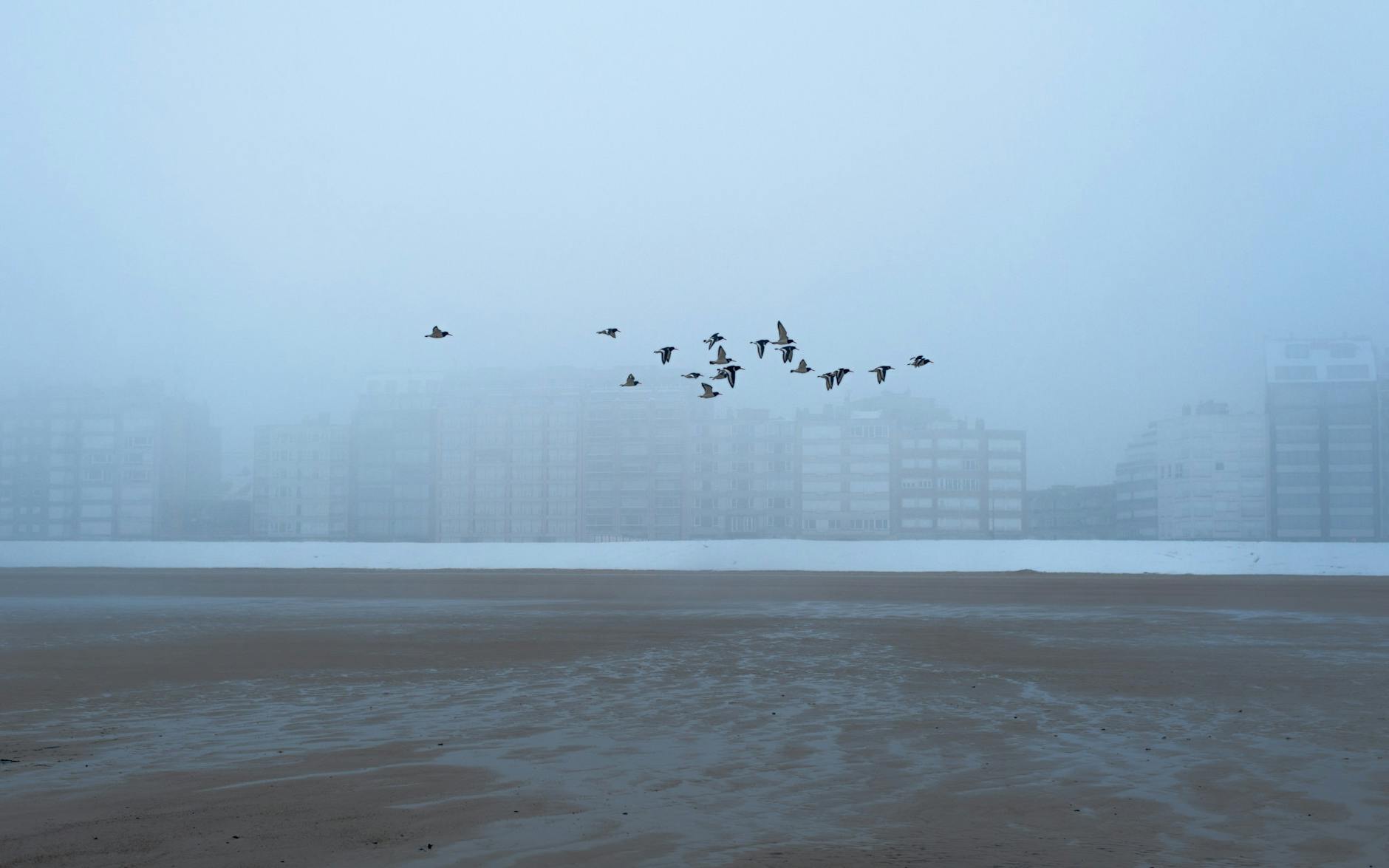
In Brianna Castagnozzi’s Angry Birds: The Post-Modernist Symbolism of Birds in the Poetry of Plath and Sexton, Castagnozzi writes, “Pan-culturally, birds symbolize freedom, strength, and peace—associations often evident in the verse of male poets” (Castagnozzi). This text is part of a larger conversation on how birds are viewed in post-modern literature, in which these animals are romanticized or even a metaphor for sex; this trend even dates to Latin poetry, with Catullus’ wildly erotic poem Lesbia’s Sparrow. Particularly in Catullus’ poem, birds are culturally constructed as free creatures, unobtainable and uncontrollable by humanity (particularly men). A bird’s rurality and freedom of flight bring a beauty to them, which is treated like the pastoral. In this way, we, as people, consume birds’ beauty and wish to project humanity upon them, but we do not meaningfully support these animals in our daily lives and urban infrastructure. In Literary Studies, the Animal Turn, and the Academy by Jennifer McDonell, McDonell writes, “‘Animal’ is our abstraction for all that walks, crawls, swims and flies other than ourselves […] the word does violence to the heterogeneous multiplicity of the living world” (McDonell 6). This ongoing conversation around animal studies is already inclusive of birds, but it is in combination with the pastoral that we understand the human cultural perception of birds builds these animals up as a literary device and not living beings. This can be both an act of violence and one of empathy; it is violence as we romanticize these birds and grow to believe that birds are living happily and freely—often contrasted by saying that we, as humans, are not—despite the hostile infrastructures across the world that we have created. Glass skyscrapers and large, reflective windowpanes are a great killer of birds, similar to how oil drilling platforms in the ocean kill mass amounts of migratory species in the early spring and fall months. Though these hostile structures did not exist in Catullus’ time, it is poetry like his that has built up our cultural perceptions with time.
In contrast to this violence, there is still a great deal of empathy for birds and rurality. One of the most famous bird poems in modern American history is a commentary on systemic racism. Maya Angelou’s book, I Know Why the Caged Bird Sings, is a memoir of her life. Included in the autobiography, Caged Bird goes as: “The caged bird sings / with a fearful trill / of things unknown / but longed for still / and his tune is heard / on the distant hill / for the caged bird / sings of freedom” (Angelou). In this instance, birds are being viewed through a post-colonial lens, with a great deal of understanding of the state of human imperialism and dominance as a metaphor for American systemic racism before and around the civil rights movement. Ocean Vuong, a post-modern Vietnamese American poet, commonly uses birds throughout his works. The Punctum is a piece on the history of lynching in the United States, and particularly the erasing of that American history, in which Vuong writes, “And you wonder if it’s an entrance or maybe the mark of something higher, something already leaving, on wings. Yes, it’s just a bird, they say. A smudge of flight, defects in the camera. A product of its time. This is all a product of the times” (Vuong). Similarly, the bird is a metaphor for an “elusive” moment in time or the erasure of history, which serves as a stand-in for genuine accounts and people’s lives. In this way, humanity is positioned onto these birds, as we culturally understand how these animals have been abandoned in the desire for urbanization, making them a powerful metaphor for the dehumanization brought by colonization and cultural systems of injustice. This is particularly interesting when we consider how pastoral poetry often idealizes rural life and how critiquing this similar pastoral ideology could reframe our view of colonialism and imperialism. For example, the language in Joseph Conrad’s Heart of Darkness, like many pastoral poems, similarly expresses the beauty of the Congo River but consistently dehumanizes the African people across the continent. To this end, pastoralism idealizes, adores, and obsesses over some things, such as birds or nature, while treating others, presumably less deserving or less beautiful, as unnecessary disruptions to the consumable aesthetics. I posit that these literary depictions of birds (Vuong’s and Angelou’s) objectify these animals, but not in such a way that furthers the pastoral. Rather, they create empathy for rurality, as though it were a vein of social justice in and of itself, similar to it in goal, as well.
By comparison, other pieces romanticize birds using their prescribed aesthetics, assigned by historical poets like Catullus; this pastoral view does not bring the same empathy to these brilliant creatures. Rather, it clarifies them as ornaments to people. For example, Wild Geese by Mary Oliver goes as: “Meanwhile the wild geese, high in the clean blue air, / are heading home again./ Whoever you are, no matter how lonely, / the world offers itself to your imagination, / calls to you like the wild geese, harsh and exciting – / over and over announcing your place / in the family of things” (Oliver). This poem, interestingly enough, is certain to define humanness through animals first, as though it is through this contrast that we find ourselves. Richard Siken’s The Language of the Birds constructs this humanity somewhat differently. Siken writes, “To be a man on a hill, or all the men on all the hills, or half a man shivering in the flock of himself. These are some choices. […] A man had two birds in his head […] The man thought to himself, One of these birds is not my bird. The birds agreed” (Siken). In this poem, birds are a reflection of the self, like somewhat of a persona to be played as part of the language of people. It is again through this humanity that we find animals to be a separate entity. Emily Dickinson does something similar in Hope is the thing with feathers. Dickenson writes, “[A bird] perches in the soul – / And sings the tune without the words – / And never stops – at all” (Dickinson). These depictions of birds relate to the pastoral in how they idealize the rural as though such a thing were inherently removed from nature. The bird is viewed as natural, innocent, and free, despite the decimation and climate-related atrocities forced upon them. In this light, birds are beings humans push wrongness upon, not creatures that are equals to people, nor innocent to the flaws of humanity. It seems that to view these animals differently might posit that they are incapable of experiencing suffering, thus making us inept at actionable empathy.
Birds are a powerful literary symbol across cultures and across poetry, even within a singular culture, to such an extent that they are almost universally understood to be symbols of freedom. But why is it that we, as a people, posture birds as so free? While we decimate their habitats, create hostile architecture, we use them as a metaphor for the enlightened self, as though they are innocent and pure to the true ways of a twisted world. By doing this, they are being viewed through a pastoral world view, which deeply romanticizes the rural world. Birds are not free; they have been limited by the predator-prey hierarchy constructed by human dominance across the globe. To ignore this truth divorces the environmental impact of people from the species lost and decimated every single day. People are envious of specific qualities of birds, such as their wings and the “innocence” falsely pushed upon them; we are not jealous of how they have been treated. This is how postcolonial lenses on these animals increase empathy, while others construct an image that does not align with rural reality. We selfishly portray birds as heralds of wisdom and freedom to such an extent that we no longer view them with compassion. The rural—and those attached to it—are treated like paintings, something beautiful to stare at and hang on the wall. They are loved but not cared for, and so is the impact of our rural envy and deep-rooted imperialistic, animalistic desires.


 Sprockets and Springes