Mihalis Sourgiadakis
Prof. Helms
10/3/2024
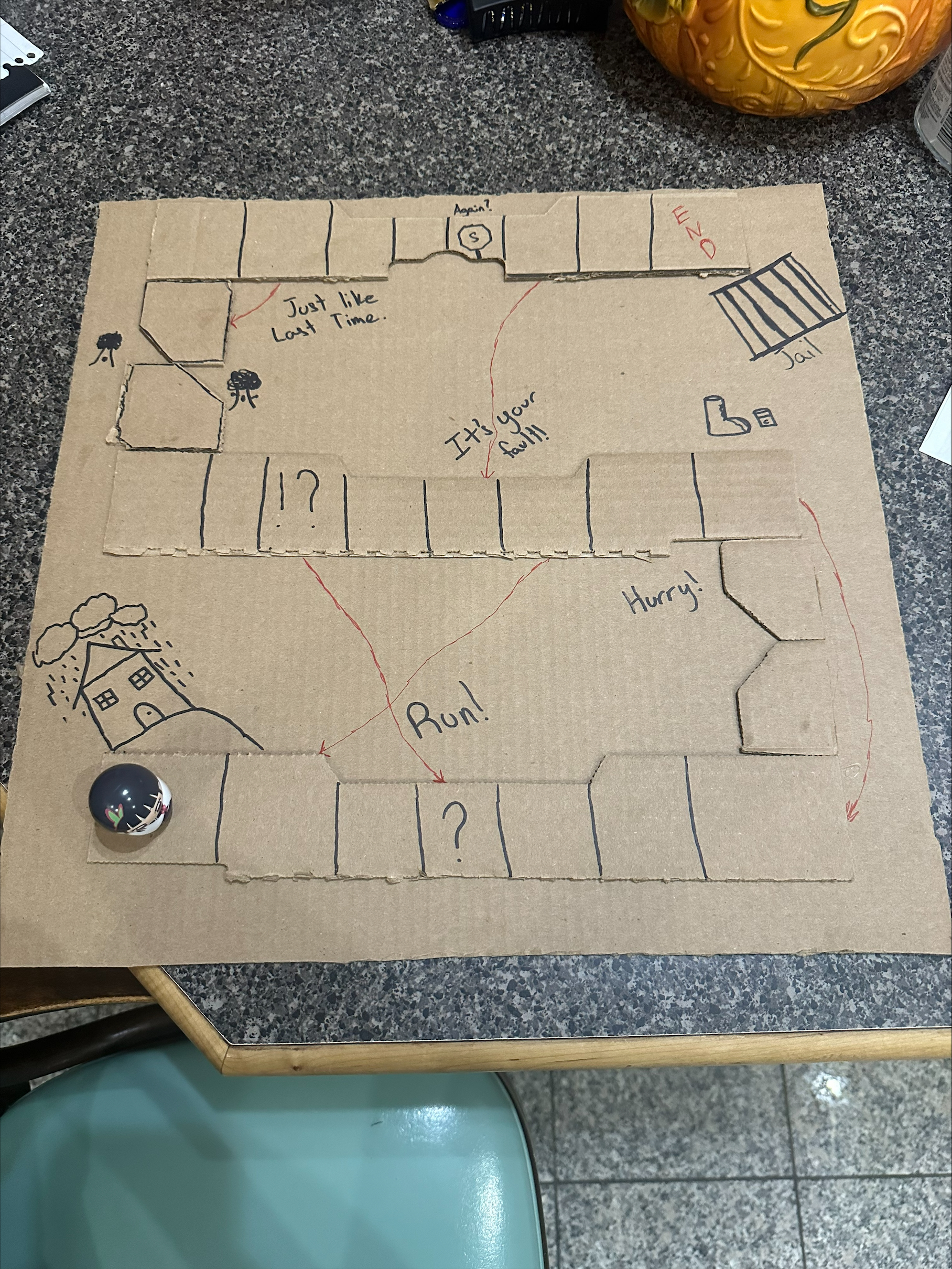
For this project we had a choice of any material we went over this semester. I decided to go with the Dew Breaker, by Edwidge Danticat. In most of the literature we have been assigned, women aren’t given much of a role. In Soyinka, and Dew breaker, all the woman characters are either pieces to make the men in the story have more depth, or random npcs. In today’s society, women are starting to get portrayed as actual people who have their own ideas and ambitions. However, society is still rigged for women even if it has become more accommodating for them. This made me want to create a board game expanding on what could have happened if Ann was given that same treatment, and after remembering the famous board game, snakes and ladders, I knew the direction I wanted to go in. Mexican Gothic, by Silvia Moreno-Garcia was one of the major inspirations I took from in order to create the board game regarding Ann’s future in Dew Breaker. The effect of diminishing womens ideals, ambitions, and power makes their characters in the story seem irrelevant.
Snakes and ladders is a game that dates back thousands of years, the earliest of its origins is two thousand years ago in India. I used to think that it was just a game of luck, until I watched the youtube video on the history of Snakes and Ladders. You may be thinking that snakes and ladders have nothing to do with feminism and how women are treated in stories and mythology, but it really does show us the mindset of all generations. Snakes and ladders is a board game that requires no skill, choices, or even thinking, all it requires is for you to trust in your luck and roll the dice. Throughout the entire game you are basically leaving everything in the hands of fate, or some may say God. Snakes and Ladders is a game that is used to push forth the idea of leaving yourself in the hands of your religion, but what if we look at it through a feminist lens. Women should just leave their fate up to men because they possibly couldn’t have ideas or ambitions of their own. I then decided to look deeper into what true feminist are saying about Snakes and Ladders and found this article. In this article it talks about how, “olds within it
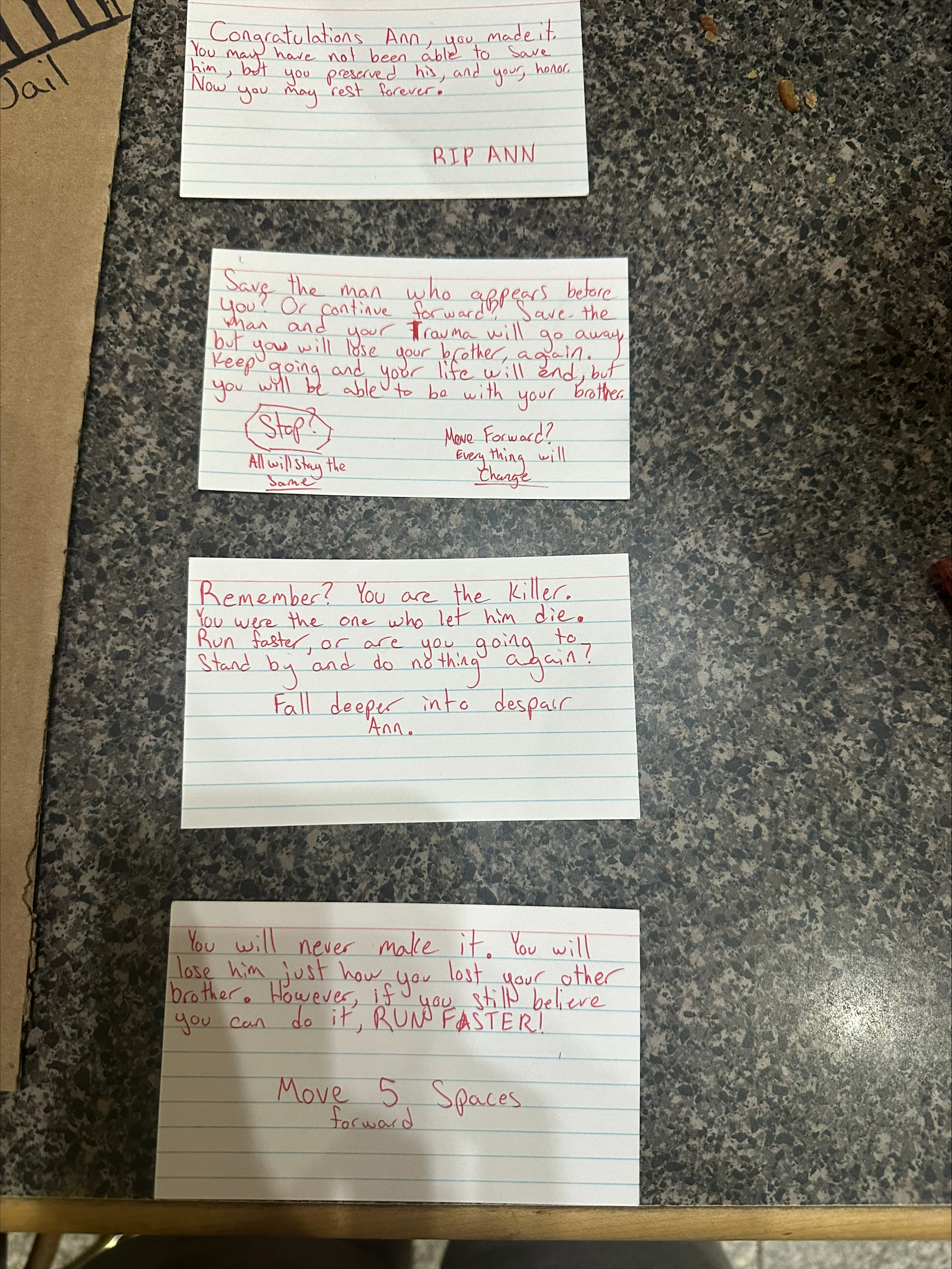
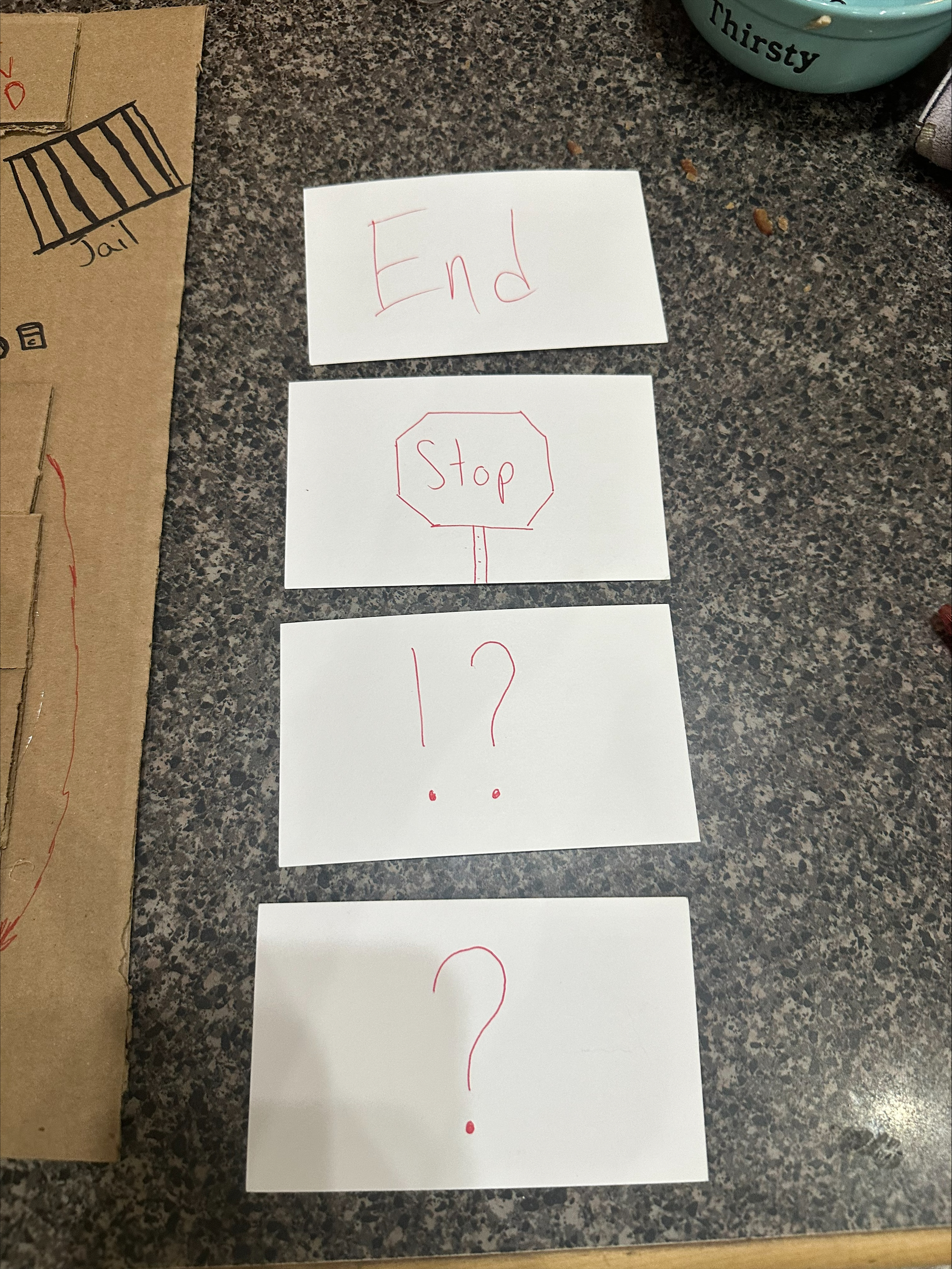
notions of losses and gains, ups and downs, but, at the same time, questions these binaries in its evocation of simultaneity: the dice can be weighted either way and the snakes and ladders are necessarily intertwined, leaving endings always contingent2.” This is basically showing that even though it may seem to be a game that is solely based on luck things can still be rigged for certain players of the game, women. Women theoretically have the same base luck as everyone else, but their dice are weighted with the views from society. In the board game I created, I had the spaces you would land on that would require you to read a card. This card would basically have something that diminished the main female character into not wanting to continue going forward. I believe this represents how the article viewed women being given weighted dice. I feel as though this sort of game is the perfect way to create a piece about Dew Breaker, because the women are only there to further the plot of men and are subjected to their fates. Ann knew that she had the chance to run into the jail and find her brother, but instead decided to leave herself to a man she had just met because she couldn’t escape her past. She let fate take her, and it had terrible consequences for her. I wanted to make a game where she had the chance to change her ending, which is where the inspiration from the Mexican Gothic comes in.
In Mexican Gothic, our main character Noemí Taboada, is basically drugged and almost imprisoned in a house, by a man, in order for him to become immortal. The plot goes from kinda weird to crazy really quickly, but we are always aware that Noemí is a real person who doesn’t only rely on men. However, she is still subjected to society around her and people’s beliefs even though she knows it’s not right. She has to act a certain way in order for people to listen/do what she wants. This in turn sometimes leads to her downfall, especially when it involves other men in the story. Even though she is aware of the norms and what she has to do, she is still somewhat forced to follow them. At the end of the story she manages to escape from the house and actually saves the man from his fate, instead of the other way around like in Ann’s case. Ann got saved by the man because she was mentally freed from the burden of not being able to save her drowning brother, while Noemí saved this man because she wanted to, it did nothing for her in the long run.
I believe that by making a board game that expands on Ann and shows her pushing past her imprisoning trauma, while evolving from a character that solely drives forth men’s plot development, would make a way bigger impact on the reader. Yes we live in a society where women basically have weighted dice against them, but pushing past that and doing something is where true feminism lies. When men and women both have the same weighing dice in society, is when feminism won’t be required anymore. Having Ann die trying to save her brother instead of falling victim to the man that killed him will create a story where Ann pushed past her rigged fate and lived her life the way she truly wanted to.

Citations:
Moreno-Garcia, Silvia. Mexican Gothic. New York, Del Rey, 2020.
1Danticat, Edwidge. 2005. The Dew Breaker. New York, NY: Random House.
2Extra Credits. “Snakes and Ladders – How the Meaning of an Ancient Children’s Game Adapted Over Time – Extra Credits.” YouTube, YouTube, www.youtube.com/watch?v=PzLYKY1nPsY. Accessed 4 Nov. 2024. “Extra Credits.” YouTube, YouTube, http://www.youtube.com/@extracredits. Accessed 4 Nov. 2024.
3Hall, Catherine, Sue O’Sullivan, Ann Phoenix, Merl Storr, Lyn Thomas, and Annie Whitehead. “Editorial: Snakes and Ladders: Reviewing Feminisms at Century’s End.” Feminist Review, no. 61 (1999): 1–3. http://www.jstor.org/stable/1395569.

 Sprockets and Springes