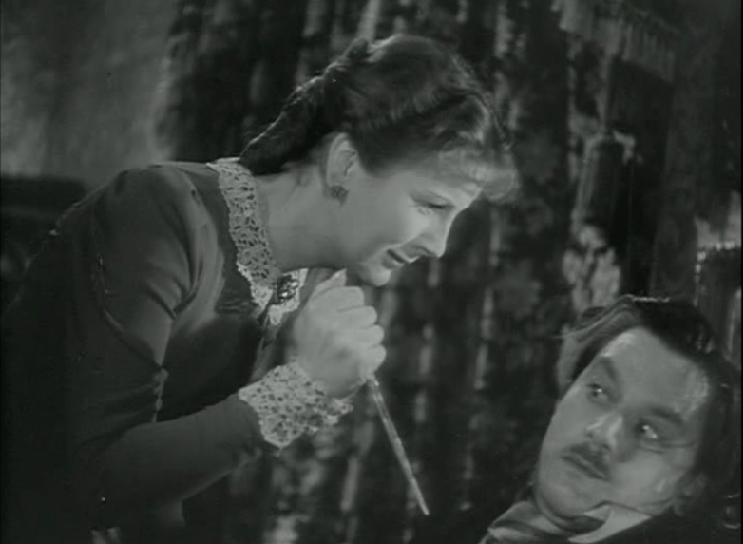
Psychological manipulation works as a tool for the greedy and unremorseful, but how effective are their tactics in reality? Side effects including: trauma, anxiety and depression for those who experience long term psychological manipulation. There’s long history of mental exploitation, the art of it existing in classic literature and modernized today in the form of “gaslighting.” The term itself comes from the 1940 film Gaslight, following the psychological torment a man (Paul Mallen) inflicts on his wife (Bella Mallen) in hunt for precious rubies. This doubt created in Bella left her sanity in question. Since this film’s release, the conversation on manipulation has grown. Leading to the development in our modern understanding of manipulation and gaslighting taking its effect on mental health.
Gaslighting is still “Modern”
A domestic abuse case determining the innocence between two parents, with claims of abuse by one another, was flipped on its head when gaslighting was used to break down the husband’s arguments. Piecing together the accusations made, Dr. Proudman determined the husbands claims were gaslighting, as the husband made accusations toward his wife’s mental state and accused her of having mental disorders which she was not diagnosed with. Luckily for Dr. Proudman’s client “gaslighting” is understood much better today than a century before.
Manipulation Therapy
“Hippocrates argued that the brain is the organ responsible for mental illnesses and that intelligence and sensitivity reach the brain through the mouth by breathing. Hippocrates believed that mental illnesses can be treated more effectively if they are handled in a similar manner to physical medical conditions“
As a modern society, the conversation on mental illness is growing and past misconceptions are going out the window. The conversation on manipulation however dates back to 400 BCE with Hippocrates and philosophers who wanted to understand, how physical treatment could affect mental health. This lead to “Manipulation Therapy,” one of the first recorded instances of manipulation being used to affect one’s mental state.
Manipulation Therapy is known to be the predecessor to alternative medicines: osteopathy and chiropractic. The idea was to physically manipulate the body, leading to changes in the brain/mind like any other muscle. However in modern times this is related more to how individuals treat their body. Do they exercise? Do they smoke?
Also, where past philosophers expressed mental health as being influenced by physical manipulation, modern scientists have done studies that say it goes both ways. That your physical health deteriorates with your mental health or improves with it and vice versa.

A study done by the University of Manchester, United Kingdom, concluded, “The indirect effect of past mental health on physical health is mediated by lifestyle choices and social interactions. The relationship of past physical health with present mental health is only mediated by past physical activity.” (Ohrnberger)
Which together one could assume that this information makes the body one large ecosystem. If someone however felt compelled to, they could use this against someone. Manipulating their thoughts to weaken and take advantage of them.
Literature as “The Word Made Flesh”
“And the Word was made flesh and dwelt among us.” (John 1:14)
Charlotte Bronte’s book Jane Eyre existed as a catalyst for Rhys’ book Wide Sargasso Sea. Rhys used Bronte’s novel to make a modern commentary on manipulation. With a century between the books the two have glaring differences on the commentary of the treatment of women, mental health, and racism. Jane Eyre has become a bible in some sense, that has adaptations; which creates this idea of “flesh” from the novel. Making it a more living and breathing text as time goes on.
Wide Sargasso Sea by Jean Rhys, is a novel about a Jamaican girl named Antoinette Cosway, who is arranged to be with an English man named Edward Rochester. However, these were not original characters. These were characters originally from Charlotte Bronte’s Jane Eyre. Wide Sargasso Sea was written on a minor character, with a large story that was not divulged in Jane Eyre.
Antoinette Cosway’s story ends both in Wide Sargasso Sea and Jane Eyre, with her death in a house fire, jumping towards her death. Comparing how the two endings are written, Jane Eyre’s version indicates her madness led her to suicide in a confused panic and Wide Sargasso Sea’s ending indicates that the leap was a final moment to regain control and escape the mental torment Edward had inflicted on her.
The difference these endings have come down to a few things, but in the context of mental health, the main difference is in how Bronte and Rhys define Antoinette’s mental illness. When reading Jane Eyre the introduction to Antoinette happens by revealing her locked in a hidden room of the manor. She’s crazed and the only explanation we get of her mental state is that Edward was “tricked” into believing she wasn’t crazy, but according to him, she was crazy all along.
In Wide Sargasso Sea, Antoinette characterizes zero confirmed mental disorders. She however is teased with love by Edward. The two seem excited and in love when arranged to be married, but Edward quickly removes that love and when Antoinette lashes out in sadness Edward seeks to hurt her. Kidnapping her, removing her from Jamaica and taking her to England, and locking her away.
Isolations Effect on Sanity
Social isolation, is not inherently bad. The difference comes down to confinement, “Research shows that the effects of solitary confinement on mental health are often fatal, both during and after incarceration. Half of all suicides in prisons and jails occur in solitary confinement.” (Sandoval) When thinking of Antoinette as an individual who could have been the “Jane Eyre“ version described by Edward or the “Wide Sargasso Sea” version written by Rhys, either version would be destroyed mentally by the years of isolation Edward Rochester puts her through.
“Individuals were overall 24% more likely to die in the first year after release, including from suicide (78% more likely) and homicide (54% more likely). They were also 127% more likely to die of an opioid overdose in the first two weeks after release.” (Sandoval)
–
Doesn’t matter if you’re in space or in a locked away room of a manor, you’re destined to suffer mentally.
Were Antoinette and Bella Doomed?
Understanding manipulation and gaslighting in the moment is often difficult, as there’s many factors. Just like there is many factors in how easily someone can be manipulated, often traits that make one more susceptible is: being more emotionally dependent, having a strong desire to please others, and difficulty setting and maintaining boundaries. With that said, both Antoinette and Bella were susceptible.
Antoinette was technically “doomed” as she was a character with a predetermined ending; but could she have avoided her ending in reality?
She suffered from the loss of family, and the only family she ever had treated her poorly. This led to her being very emotionally dependent. She found herself terrified at first by the fact Edward stopped loving her, and in desperation she acted to reignite that love. Edward believed she was trying to drug him, even though she wanted to believe it was just a love potion. So he planned to hurt her accordingly, quoting his narration in Wide Sargasso Sea, “If I were bound for hell let it be hell. No more false heavens. No more damned magic. You hate me and I hate you. We’ll see who hates best.” (Rhys)
This leads me to believe the only one who could’ve prevented this attack on Antoinette’s mental health was Edward. He used a mix of social power and physical power to get away with kidnapping her without any trouble. He produced a mix of emotions from her by not loving her, and then to add salt to the wounds, he locked her away and subjected her to isolation that rotted her brain. All in all he gave her little choice in fighting back.
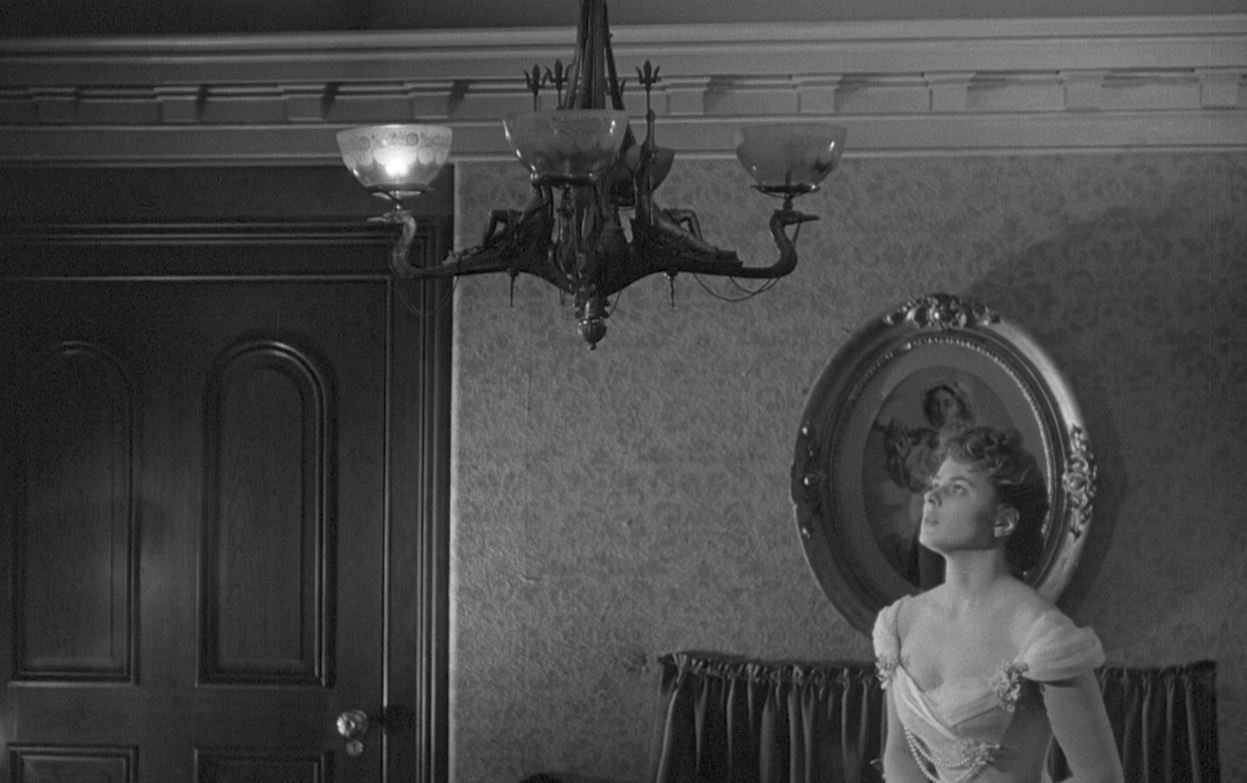
Alternatively Bella is consistently tricked by her husband. Her lack of ability to fight back comes from love and trust. If she doesn’t believe him, then it means her love for him would be tested too. So, she avoids this and falls into the belief that her being mad would be more likely. In the end the detective confronts her about her husband’s deceit and she is saved. If however the detective never came, she seemed screwed.
In the time period of 1940, this film was recognized as a film of manipulation, but only slowly changed the conversation on male power over women. Bella as a women in this movie is subjected to the fact that she’s not given an opportunity to leave her husband easily, due to the misogyny and control men/her husband pose over women at the time. She was doomed in a way, as her mental health was being bullied.
Conclusion
Mental health is heavily affected by all inputs. It’s physical health, it’s social interaction, and self care. The idea of manipulation leading to mental disorders is not only nonfiction, but it’s studied, and recognized. People hold power in their words. Abuse takes many forms, but doesn’t have to be physical to leave long lasting scars. So, mental disorders aren’t contagious, but if someone is greedy or unremorseful enough they’ll have the power to spread declining mental states in those around them, through manipulation and gaslighting.
Citations
Health, Harbor Mental. “The Effects of Gaslighting on Mental Health.” Harbor Psychiatry & Mental Health, 27 Nov. 2023, harbormentalhealth.com/2023/09/19/the-effects-of-gaslighting-on-mental-health/.
Kim, Jean. “Gaslighting: What Is It and Why Do People Do It?” Psycom, 14 Oct. 2021, http://www.psycom.net/gaslighting-what-is-it.
Kleisiaris, Christos F, et al. “Health Care Practices in Ancient Greece: The Hippocratic Ideal.” Journal of Medical Ethics and History of Medicine, U.S. National Library of Medicine, 15 Mar. 2014, http://www.ncbi.nlm.nih.gov/pmc/articles/PMC4263393/.
Ohrnberger, Julius. “The Relationship between Physical and Mental Health: A Mediation Analysis.” Social Science & Medicine, Pergamon, 8 Nov. 2017, http://www.sciencedirect.com/science/article/pii/S0277953617306639#abs0015.
Pettman, Erland. A History of Manipulative Therapy, http://www.barralinstitute.com/docs/articles/a-history-of-manipulative-therapy.pdf. Accessed 9 May 2024.
Quinn, Deborah. “Gaslighting.” Sandstone Care, Sandstone Care, 15 Feb. 2023, http://www.sandstonecare.com/blog/gaslighting/#:~:text=Not%20only%20can%20gaslighting%20lead,for%20people%20to%20trust%20others.
Sandoval, Jessica. “How Solitary Confinement Contributes to the Mental Health Crisis.” NAMI, 7 Feb. 2024, http://www.nami.org/advocate/how-solitary-confinement-contributes-to-the-mental-health-crisis/#:~:text=Mental%20Illness%20and%20Solitary%20Confinement&text=Research%20shows%20that%20the%20effects,jails%20occur%20in%20solitary%20confinement.

 Sprockets and Springes