By: Alexa Strong
For this project, I chose to do a digital drawing representing both Jane Eyre from Charlotte Bronte’s Jane Eyre and the creature from Mary Shelley’s Frankenstein, 1818 version (photos of said drawing inserted towards the end of this post). Isolation and loneliness are common themes strung deeply throughout the two books, so I thought of connecting those themes with the two characters through visualization. They both experience being outcasted by society, whether it is for only one moment in time or their whole life; neither of them seem to be able to escape it.
Jane’s feelings of loneliness and isolation are carried with her throughout her whole life. It all starts in the beginning when she is emotionally and physically abused by those around her: her relatives and people at Lowood School. Even as an adult at Thornfield Hall, she is consumed by the feeling of loneliness. These feelings follow her as we read about her life. At Lowood School, Jane is placed on top of a stool, where she has to stand and take Mr. Brocklehurst’s verbal abuse. He claims that Jane, “who might be one of God’s own lambs, is a little castaway—not a member of the true flock, but evidently an interloper and an alien” (Brontë 67). It is appointed that Jane is a liar and that no one is allowed to speak to her for the rest of the day. Being shut out and shunned for simply existing and being framed, is what I find to be the moment Jane truly spirals into feeling hopeless and unwanted.
The creature from Frankenstein can relate to Jane in the sense of feeling unwanted by everyone around him. He experiences profound loneliness and isolation from the moment of his creation when he is immediately rejected and reviled by society, including his creator, because of his grotesque appearance. The creation’s attempts at connecting with humans, such as the De Lacey family, do not end well. He is feared and is slapped with the label “monster”, which further reinforces his sense of alienation from society. The creature reflects on his loneliness and isolation and ultimately ends up comparing his situation to Satan from John Milton’s “Paradise Lost.” The creature expresses, “Satan had his companions, fellow-devils, to admire and encourage him; but I am solitary and detested.” (Shelley, Vol. 2, Chap. 7). The creature has no one, not even any companionship to pull him out of the deep dark isolation he was born into. Rejected and all alone in a world he did not ask to be brought into, and neither did Jane.
Now, to go into my process for the drawing itself: I first started with a sketch of how I wanted, specifically the characters, to be laid out. I knew I wanted Jane and the creature to be looking at each other with somber looks on their faces. I also knew for sure I wanted Jane to be placed on the stool she was put on when she was being humiliated because that was one of her loneliest moments. Having her on the stool also put her into the frame and met the monster’s height for the drawing. I also planned for the drawing to be very grim and grey-toned to go with the emotions being represented.
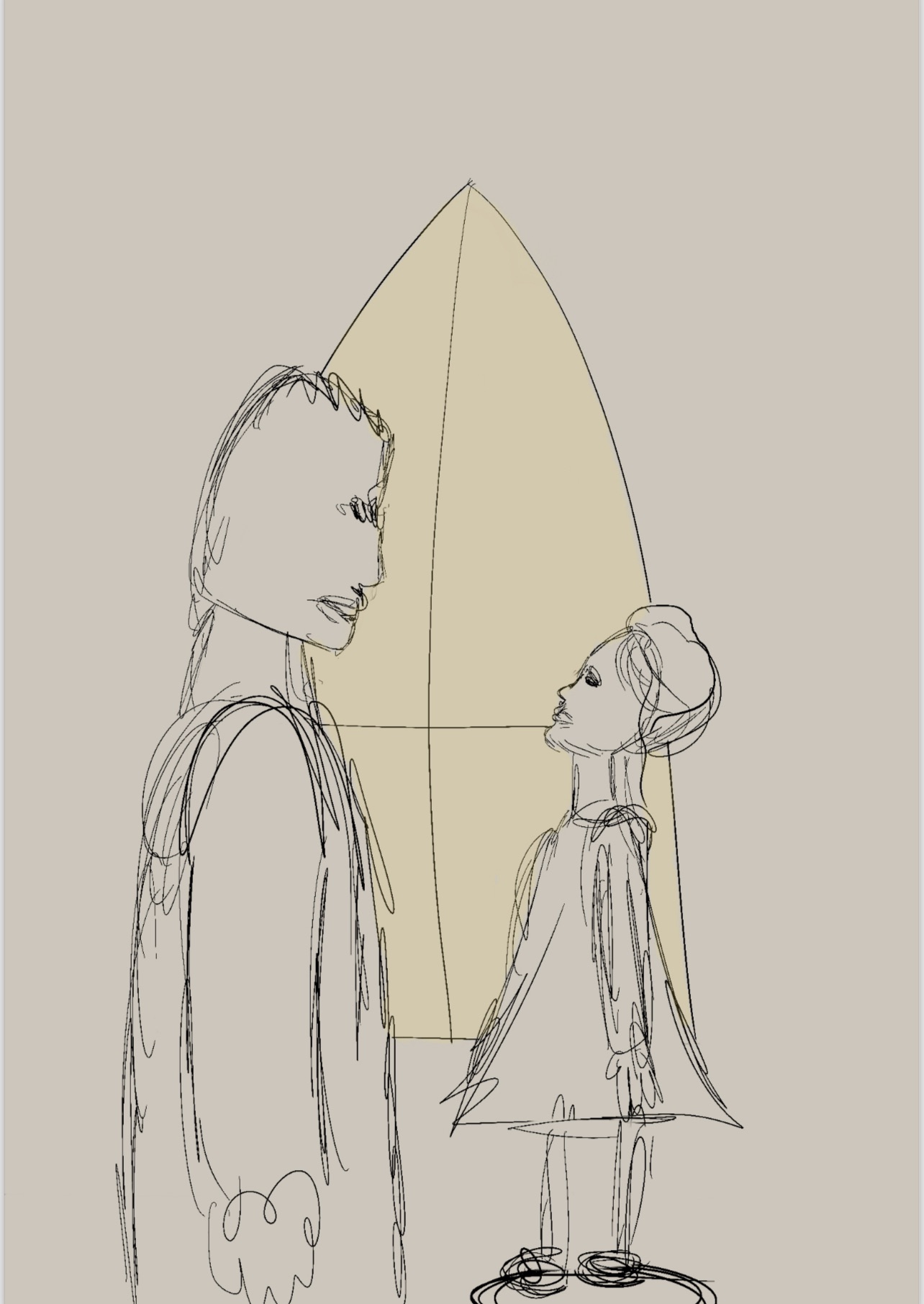
Once I had done the sketch, I moved onto working on the draft for the piece. The draft did not have much done to it because once I got the general set up and details of Jane and the creature down, I began working on the final product of it.
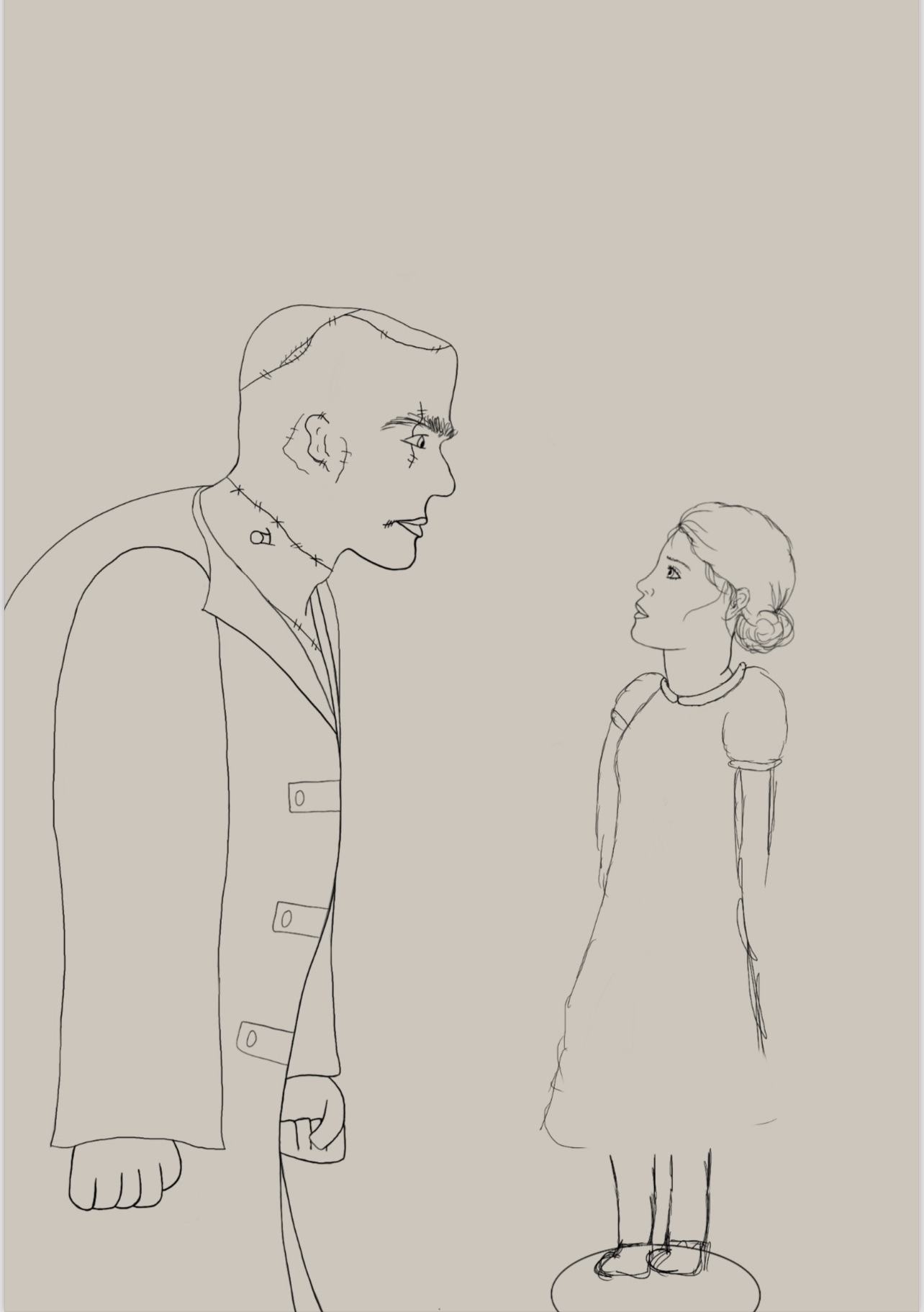
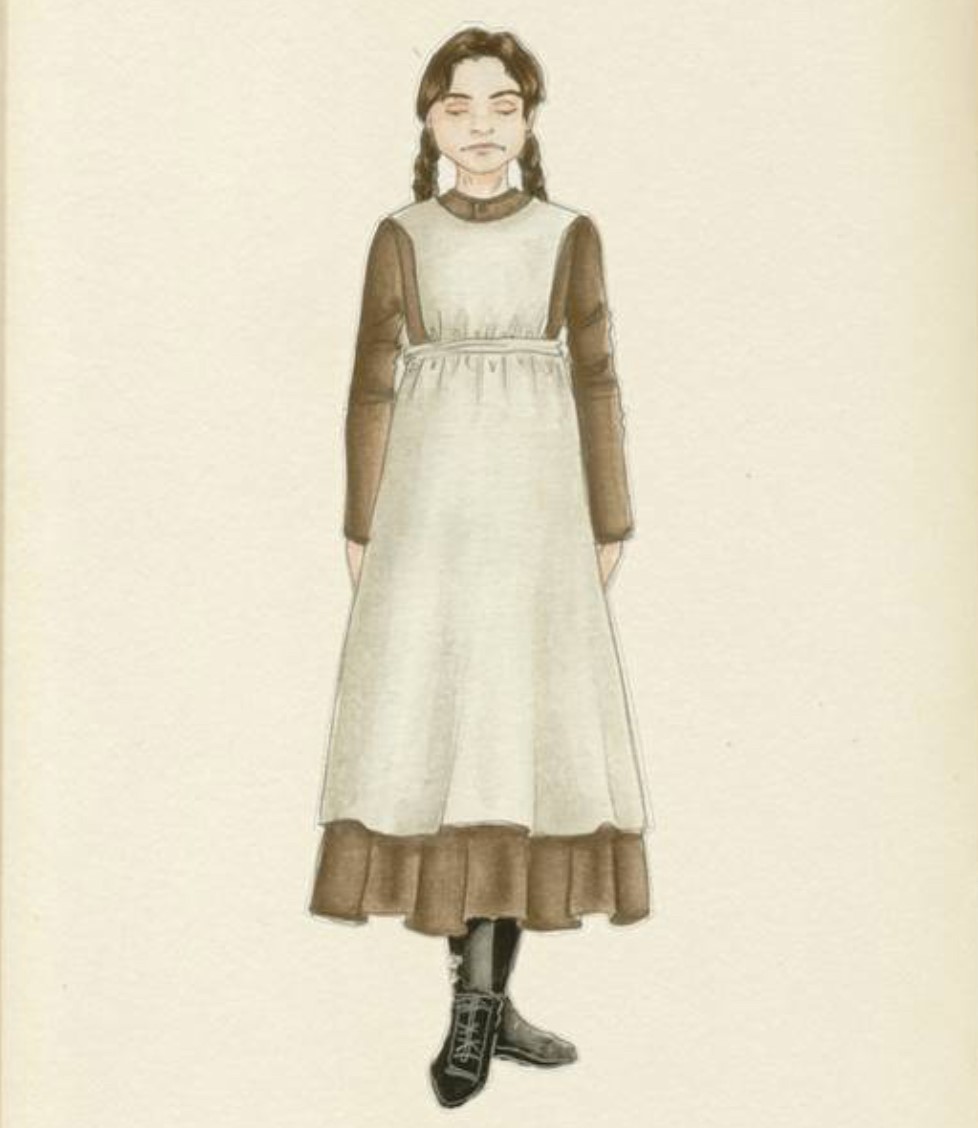
For the final product, a lot of time and effort went into making it (more time than I would like to admit). For Jane, the outfit I drew for her was inspired by an image provided by a website about the Bronte sisters. I honestly had the toughest time getting Jane’s proportions right, but in the end, it came out the way I wanted it to, thankfully.
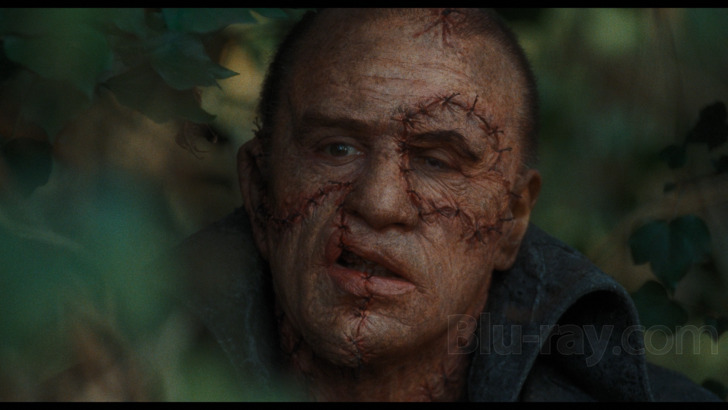
The creature on the other hand was easier to draw because he did not need to be perfect since technically he is just random, dead body parts put together. For his look, I was heavily inspired by the known square-ish head shape, but I did not follow through with the popular green skin. Inspired by the 1994 movie, Mary Shelley’s Frankenstein, I went with that type of skin look for the creature because it made the most sense to me and fit better with my vision.

(Art by Monster Man)
For the posing, I originally had the two of them just staring at each other, but found that to be too disconnecting. That is why I decided to have Jane reach a hand towards the creature. Her reaching to him connects them and in a way symbolizes that neither of them is alone in the way that they feel.
For the background, I am not quite sure why I added the window; it just felt right and was a filler. The stone wall, however, was an idea that I added later after drawing the characters and the window. I felt as though the drawing was missing something so I added stones, and within the stones, I added their labels that caused them to feel so outcasted and isolated from society: “monster” for the creature and “liar” for Jane. That idea, I think, is what tied together the whole piece.
I think overall, this piece is all about recognizing that anybody can feel the way that the creature and Jane do. A lot of feelings of isolation and loneliness can easily be hidden by the different attributes and actions of the individual. The creature hid but also expressed his emotions through violence and revenge. Jane, on the other hand, put her emotions into her drawings. Two different people, two different stories, two different ways of coping, but the same two emotions consuming both. These characters and stories are beautiful representations of how lonely and isolated you can feel in a world full of people.
Works Cited
Barker, Sandra. “Bronte Sisters and the Bronte School House.” Bronte School House, www.bronteschoolhouse.com/history. Accessed 8 March 2024.
Branagh, Kenneth, director. Mary Shelley’s Frankenstein. TriStar Pictures, 1994. Accessed 8 March 2024.
Man, Monster. “The Frankenstein Monster.” Pinterest, 3 June 2012, https://pin.it/26jrjUDPO. Accessed 8 March 2024.
Shelley, Mary Wollstonecraft. “Frankenstein; or, the Modern Prometheus.” Frankenstein or The Modern Prometheus, https://pressbooks.pub/frankenstein/. Accessed 8 March 2024.

 Sprockets and Springes