Makenna Horne
Prof. Helms
Critical Theory
8 March 2024
You may consider Ain’t Burned All the Bright a poetry book, or maybe a mature picture book, or maybe something in between. Written in one sitting and drawn onto pocket-sized moleskine pages, Jason Reynolds and Jason Griffin created a masterpiece, engulfing the intense images and feelings of the year 2020. This genre-bending piece is intensely unique and encapsulates the ever-changing way we view genre, or not-genre. Ain’t Burned All the Bright emphasizes that genre is less important than the work itself, and that multimedia can showcase the intense emotions of the human experience. Ain’t Burned All the Bright is an increasingly useful and important text because it showcases the post-structuralist theory that context is massively important to literature, because without it some forms of literature would be intensely misunderstood or misleading.
Ain’t Burned All the Bright neglects punctuation, page numbers, and some may say, full pages. Adorned with brightly (and dark) colored graphics and images, this book is a beast, weighing over two pounds at almost 400 pages. It follows the massive events of 2020, like the Black Lives Matter Protests, including the murder of George Floyd, and Covid-19 struggles through the eyes of a young man and his family. Jason Reynolds authored the poetry, while Jason Griffin created images. They didn’t do this together though:
“Reynolds shared the first part of his work with Griffin the next day. The book is divided into three sections: Breath One, Breath Two, and Breath Three. Throughout their collaboration, Reynolds would share one section at a time with Griffin, who would then begin working on the art to accompany it. ‘Immediately, I stripped all the punctuation from the breath before I gave them to him because I wanted him to be free to move the language around, however he saw fit, which is why everyone thinks it’s this poem,’ says Reynolds. ‘But really, it’s a bunch of semicolons and commas in it that I took out because I didn’t want him to be hung up on them. I wanted him to be free to do his thing’” .
(Hinton)
Reynolds immediately ditches the genre of the piece, and although you may find Ain’t Burned All the Bright in the poetry section, it really is a genre of its own. This book deliberately defies genre classifications, and in turn will become one of the newest installments to post-structuralist work.
Post-Structuralism has no classified genre, although it could be considered that post-structuralist theory and criticism is its own genre. Post-structuralist critique on literature is thought to be idealist and apolitical, which can be positive or negative, depending on the way you think of politics (Woodward, et al.). This cannot be argued for Ain’t Burned All the Bright though, which is very clearly a political critique on the state of the world, more specifically the US in 2020. But post-structuralist literature doesn’t have to be those things, the intention with post-structuralist critique and theory is that there is no needed structure, and that any structures are a result of culture and can be molded to fit anything you want it to if you have the culture or “typical” to back it up. Post-structuralism intends to break the molds and proves that the truth is hard to distinguish. Jason Reynolds talks of this referencing the increasing anxiety revolving the news cycle, and how the news is where the people get their information, but the information is increasingly not informative and just fear mongering in this section:
“and I’m wondering why/ he won’t change the channel/ and why the news/ won’t change the story/ about how we/ won’t cure the sick/ because we won’t wear a mask/ and wash our hands/ and stay a safe distance from each other/ and how hugs have to be/ halfway around the world/ or at least/ on the other side of the room”
(Reynolds)
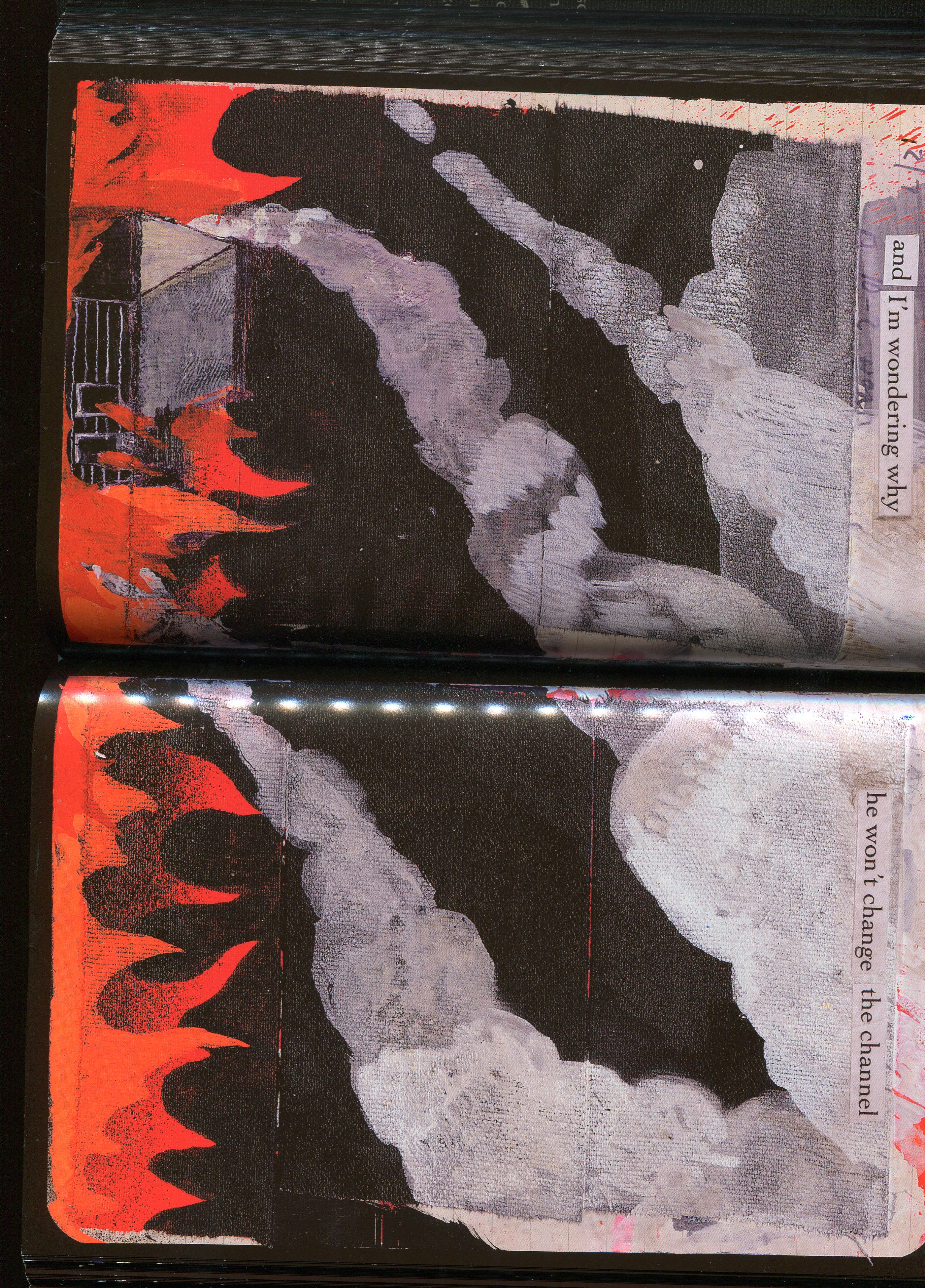


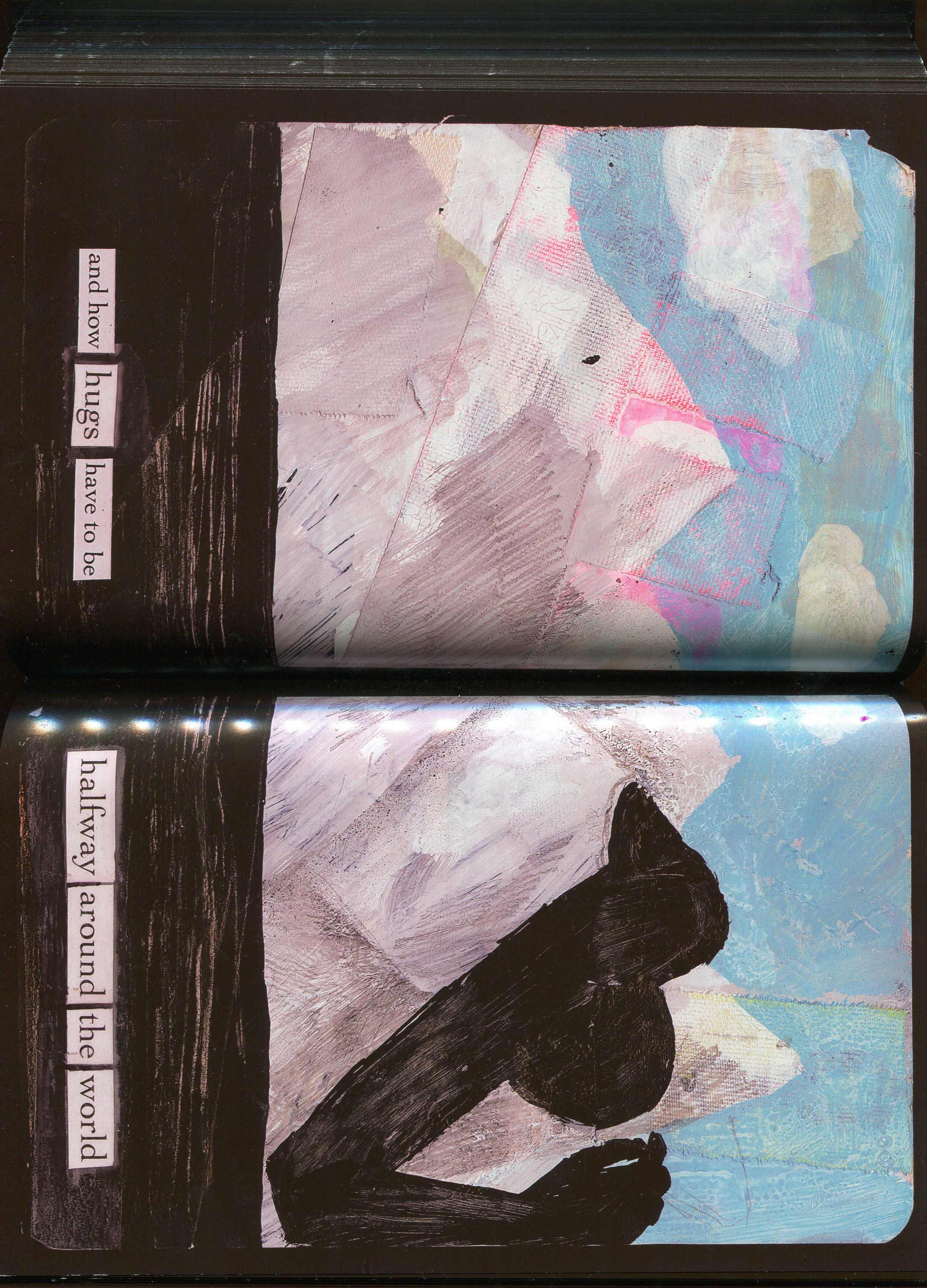

(Reynolds, Griffin)
Post-structuralism tells us that the context to a work is important, if this was a science fiction novel, we would have a different understanding of the effects on the population that a pandemic mixed with increasingly more violent acts of racism would have. The individual meaning of this text is “the boy portrayed is increasingly more wary of his surroundings and increasingly more worried about the effects on the population that his circumstance (a global pandemic and violent acts of racism) will have.” Alone, this section of text wouldn’t have much impact but with the context of 2020 and the constant flow of information and misinformation it can hit like a freight train.
Jason Reynolds frequently writes about hard-to-reach topics, like grief, racism, discrimination, and bullying. Ain’t Burned All the Bright is no different, where he writes of murder, racism and the existential crises caused by the Covid-19 pandemic. Reynolds and Griffin speak of the book being the ability and the inability to breathe, and how writing and illustrating about this massively challenging time was an “oxygen mask” (Hinton). Reynolds writes in the novel:
“but I should be standing up/ looking for an oxygen mask or something/ or searching for a sign/ or a sigh/ or something for my lungs/ to l u n g e toward/ because what is life/ in a house underwater”
(Reynolds)


(Reynolds, Griffin)
This novel, without the context, would not be obsolete, but would be massively misunderstood. Understanding the context of a work, and possibly even the work during the time is incredibly important. Without the post-structuralist view of context, work is taken at face value, and to be frank Ain’t Burned All the Bright would make little sense at all without knowing about even some of the events of 2020. Imagine this: 2020 did not happen, life went on as “normal”. Jason Reynolds and Jason Griffin create the same book, with the same images and the same text and call it non-fiction poetry. It makes no sense; those events did not happen so we don’t understand fully the scale of emotion we are seeing. If these events did happen, and we learn about them, we would have the capacity to understand it more fully. The same is true in other non-fiction literature. The same is not true in completely fictionalized literature, where events are made up and not related to current or historical events. But some context still works in those since we can grasp some parts of the text with related events. If you only take single novels, stories, poems, etc. at face value and completely ignore the context, you have no ability to understand or grasp the material.
As a genre, poetry is always and actively up to interpretation; and as a genre, poetry can be separated into sub-genres and sub-genres of sub-genres, it probably goes on forever (Glossary of Poetic Genres). Ain’t Burned All the Bright still defies poetry, being narrative verse accompanied by intense graphics. This is similar to some of Reynolds other works, like Long Way Down and Look Both Ways. Poetry is just words without context to use it. This is a very broad assumption but think of the way we read poetry: When reading poetry, a line or stanza may jump at you and make you think of something else, possibly something that’s happening in the world or something that happened to you, this is context. Like other writing context works within poetry, and furthermore proves the post-structuralist notion that context is vital to literature and the understanding of literature. Without it, we know nothing.
Post-structuralist theory tells us that context is important to understanding anything. Post-structuralist theory also tells us that culture is a construct, and that it can be molded to help us understand anything as well. When thinking about genre, and how the constructs of genre are formed and understood we can also think about writing, and how to understand writing it is very valuable to understand the culture and events surrounding the work. This doesn’t mean learning about every single event in history and how it affected every single author or person, but it means to understand a text there is a level of understanding the reader should have about that author and their surroundings. This context is helpful to the text, because in examples like Ain’t Burned All the Bright not knowing the events of 2020 and onward would make it very difficult to understand.
Works Cited
“Glossary of Poetic Genres.” Poetry.harvard.edu, poetry.harvard.edu/glossary-poetic-genres.
Hinton, Marva. Breaths and Depth. no. 7, July 2022, pp. 17–19, search.ebscohost.com/login.aspx?direct=true&db=aph&AN=157599249&site=ehost-live. EBSCOhost.
Reynolds, Jason. Ain’t Burned All the Bright. Illustrated by Jason Griffin, Simon and Schuster, 2022
Woodward, K., et al. “Poststructuralism/Poststructuralist Geographies.” ScienceDirect, edited by Rob Kitchin and Nigel Thrift, Elsevier, 1 Jan. 2009, pp. 396–407, www.sciencedirect.com/science/article/abs/pii/B9780080449104007276.
For Further Reading
Duarte, Joao Ferreira. “Introduction: Genre Matters.” European Journal of English Studies, vol.
3, no. 1, Apr. 1999, p. 3. EBSCOhost, https://doi.org/10.1080/13825579908574426.
“Post-Structuralism – by Movement / School – the Basics of Philosophy.” Philosophybasics.com, 2016, www.philosophybasics.com/movements_poststructuralism.html
School of Education University of Wisconsin-Madison. “Ain’t Burned All the Bright.” Cooperative Children’s Book Center, 6 Sept. 2022, ccbc.education.wisc.edu/aint-burned-all-the-bright/. Accessed 5 Mar. 2024.
Smith Sleigh, E. “Post Structuralism in Narrative Writing.” E. Smith Sleigh, 18 Mar. 2016, esmithsleigh.weebly.com/blogabout-author/post-structuralism-in-narrative-writing-and-my-new-book. Accessed 5 Mar. 2024.
Taylor, Jodie. “Poststructuralism.” Scholarship and Speculation, 29 Sept. 2015, drjodietaylor.com/poststructuralism/#:~:text=Poststructuralism%20attempts%20to%20interrogate%20the. Accessed 5 Mar. 2024.
Thomassen, Lasse. “Poststructuralism and Representation.” Political Studies Review, vol. 15, no. 4, Nov. 2017, pp. 539–50, doi.org/10.1177/1478929917712932. EBSCOhost.

 Sprockets and Springes