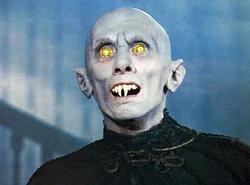
In our modern entertainment world, we are sure to find vampire lore or characteristics of it. When we want to get in touch with our blood thirsty side we can look toward Bram Stoker’s Count Dracula, or maybe Stephen King’s Salem’s Lot, and of course Stephanie Meyer’s Twilight. To name a few well known examples of modern iconic vampire stories. Where did the beginnings of vampire lore begin and how have they evolved into what we know now?
“The vampire first made its way into English literature in John Polidori’s 1819 short story “The Vampyre”. Polidori’s vampyre, Lord Ruthven, is inspired by a thinly disguised portrait of the predatory English poet, Lord Byron, in Lady Caroline Lamb’s novel Glenarvon (1816). So the first fictional vampire was actually a satanic English Lord” (Older than dracula: In search of the english vampire 2022). When searching the web for the “first” vampire in literature, it all started with Polidori’s Vampyre. The first time they were named vampires. What if we went vampire hunting in literature before Polidori’s The Vampyre? Where could he have found his inspiration from? I have a few ideas.
If I were to ask you to describe some characteristics found throughout vampire lore there are probably a few common things you would think of, maybe words like monster, blood thirsty, undead would first come to mind. However, among each story, characteristics which define a vampire differ. There are common ones we see most often, but also one’s that range from story to story. In Count Dracula, the vampire is described as looking human apart from his pointed ears and sharp teeth. He can go into the sun, unlike some stories. He is granted immortality after making a deal with the devil (Stoker, 1897). In Salem’s Lot, the vampire antagonist Kurt Barlow is depicted as far from human. He cannot be compelled by God or garlic, as in some other stories. He has sharp teeth that keep him from being able to close his mouth (King, 1975). In Twilight, the vampires are very human-like, so much so that some of them attempt to live amongst humans in secret. They are incredibly fast and exceptionally strong. They are immortal beings (Twilight, 2005). These few examples all have their similarities and differences. One thing that they all have in common is drinking blood and killing innocent people.
Now where have we read about blood drinking, monstrous beings before?
Fervid and flexing, faking sleep,
Hygelac’s servant spied from his bench,
scanning slit-eyed the long-haunted hall, awaiting
the hunted hunter. At last his enemy struck,
snatching a sleeper, sucking him bone-dry,
staining the pale planks red, grunting, gobbling,
gnawing him limb from limb, here a throat,
here a head, fingers, feet- dead.
Hands outstretched to slaughter a second,
Grendel dropped his first course,
spotting the bed where Beowulf slept.
Lines 736-746, Headley
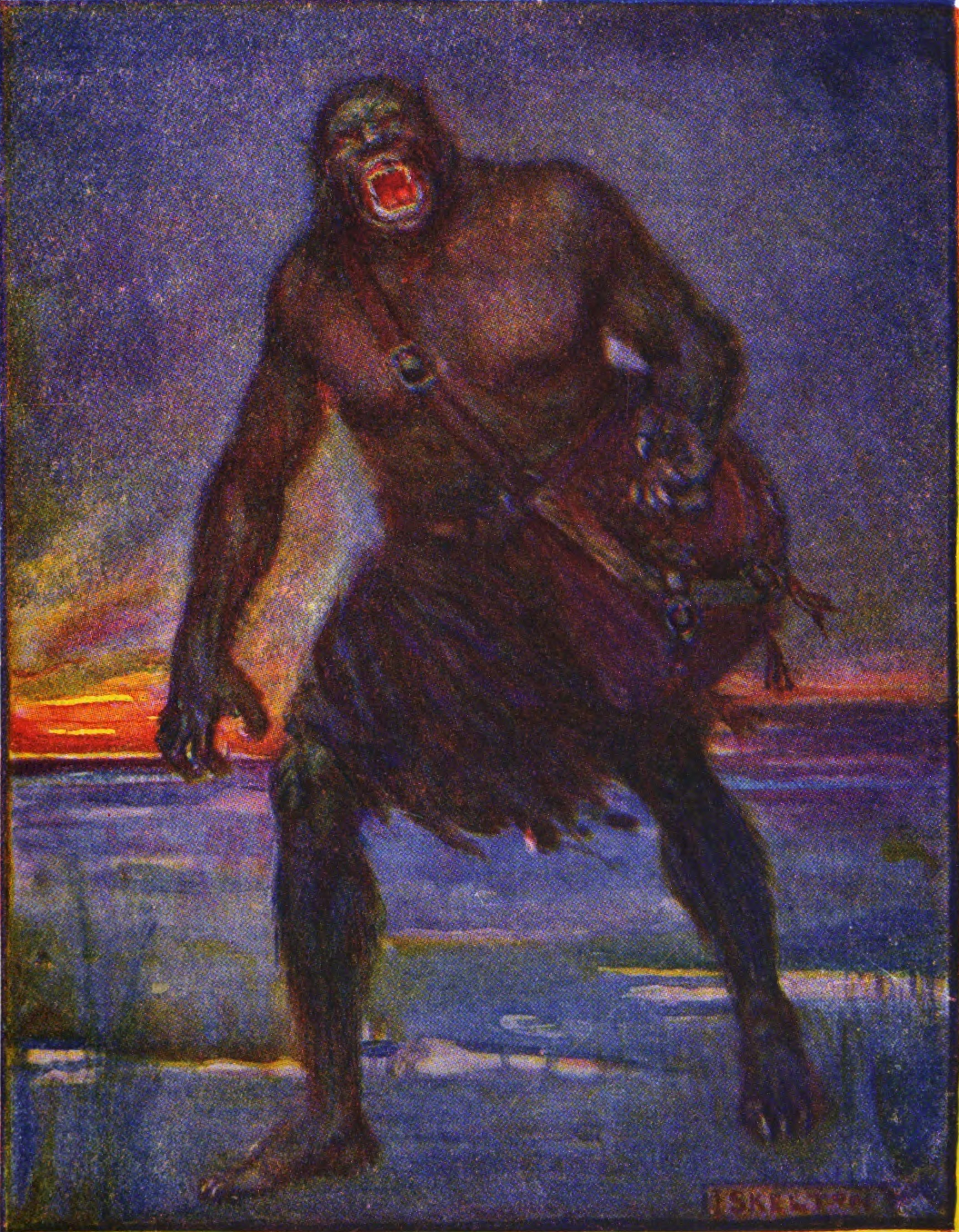
In the literary classic, Beowulf one of the main antagonists, Grendel is one of the three monsters Beowulf battles. Grendel is described as a descendant of Cain, a gigantic monster with some human qualities.
“One is, as far as they can tell, a woman, and the other, misshapen, formed like a man, but larger than any other man has a right to be. He was named Grendel, a fatherless son”
Line 1349, Headley
Referring to Grendel and his mother stalking the hillside together before his death. It is made clear that it is easy to perceive his mother as a woman. When it comes to Grendel, readers are left wondering if he is human or not based on his description given. He is ‘formed like a man’ but he is way larger than any man would be, this emphasizes the fact that he may have human qualities, but he is not human. He is monstrous and has sharp teeth. Grendel has been exiled from Heorot for his unique appearance and the fact that he is said to be a descendant of Cain, which is seen as evil. He lives as an outcast with built up bitterness and resentment. The only pleasure Grendel experiences, is when he leaves his cave at night to kill the men of Heorot. He rips them apart limb by limb, eats their flesh, and drinks their blood. The great warrior Beowulf does eventually fight Grendel and rip his arm off, it is insinuated that Grendel dies, but we actually don’t know for sure if this is true. Grendel’s large size, half human half monster description, his impossible strength, his joy of killing and drinking blood, his being descended from evil, all is align with the descriptions of what makes a vampire. He may not have been recognized as the first vampire, but his characteristics and themes present make us question if he was the first literary vampire before there was a name for it. That would make Beowulf the first vampire slayer!
Marie De Frances Bisclavret, is the story of a man who shape shifts into a werewolf occasionally, hiding it from his beloved wife. When he is in his wolf form he indulges in killing people. Throughout the story he ends up eventually admitting this secret he hides to his wife in hopes that honesty will bring them together and he can be his true self around her. The wife turns her back on him and works with another person so that he is stuck as a wolf forever, he can’t come home and be human anymore. She is disgusted with his lifestyle.
David B. Leshock’s Take On The Duality of Shapeshifting Methaphor
The half “monster” half human side of Bisclavret reminds me of themes we see in vampire lore. Being a step away from being human but still having aspects of humanity, the part of him that longs to indulge in killing and trouble, connects to characteristics common in vampire lore. Bisclavret has more werewolf qualities but if you look between the lines you can see the similarities that the shapeshifting has with vampire lore.
When it comes to classic literature and modern entertainment, people have been telling stories with the same themes for centuries. Story telling and entertainment gives us a glimpse to what we fantasize about, what we fear, and how those two can eventually come together and maybe be the same thing. Vampire lore has been feared and spoken about even in the earliest piece of english literature. Some things can be hiding in plain sight.
Works Cited:
George Senior Lecturer in Literature, S. (2022, September 13). Older than dracula: In search of the english vampire. The Conversation. Retrieved October 14, 2022, from https://theconversation.com/older-than-dracula-in-search-of-the-english-vampire-105238#:~:text=The%20vampire%20first%20made%20its,Lamb’s%20novel%20Glenarvon%20(1816).
Bisclavret – University of Florida. (n.d.). Retrieved October 17, 2022, from https://people.clas.ufl.edu/jshoaf/files/bisclavret.pdf
Headley, D. M. (2021). Beowulf: A new translation. Scribe.
The knight of the werewolf: Bisclavret and the shape-shifting metaphor. Taylor & Francis. (n.d.). Retrieved October 17, 2022, from https://www.tandfonline.com/doi/abs/10.1080/08831159909600321?journalCode=vroq20%5D
Radford, B. (2021, December 8). Vampires: Fact, fiction and Folklore. LiveScience. Retrieved October 17, 2022, from https://www.livescience.com/24374-vampires-real-history.html
Trombetta, S. (2016, October 28). 9 vampires in literature who’ve been giving readers nightmares for centuries. Bustle. Retrieved October 17, 2022, from https://www.bustle.com/articles/190479-9-vampires-in-literature-whove-been-giving-readers-nightmares-for-centuries
Wikimedia Foundation. (2022, August 9). Kurt Barlow. Wikipedia. Retrieved October 17, 2022, from https://en.wikipedia.org/wiki/Kurt_Barlow
Wikimedia Foundation. (2022, October 4). Count Dracula. Wikipedia. Retrieved October 14, 2022, from https://en.wikipedia.org/wiki/Count_Dracula
Wikimedia Foundation. (2022, September 29). Twilight (2008 film). Wikipedia. Retrieved October 17, 2022, from https://en.wikipedia.org/wiki/Twilight_(2008_film)

 Sprockets and Springes